
KI-Callcenter-Technologie: Funktionsweise und Kosten
- Verfasst von
- Jack Limebear
- Veröffentlicht
- Zuletzt aktualisiert
AnhörenArtikel anhören
Die grundlegende Herausforderung jedes Callcenters besteht darin, hohe Anrufvolumen zu bewältigen, ohne dass die Betriebskosten steigen oder die Kundenerfahrung leidet. Bisher wurden dafür Interactive-Voice-Response-Menüs (IVR) eingesetzt, die grundlegende Anliegen bearbeiten und Ihr Team für den Rest entlasten. Für Kunden sind diese Systeme jedoch oft frustrierend: Sie können nur ein begrenztes Spektrum an Anliegen bearbeiten, während alle anderen lange warten müssen.
Deshalb setzen immer mehr Unternehmen auf KI-Callcenter-Technologie, um Routineinteraktionen zu bearbeiten und das gesamte Anruferlebnis zu verbessern. KI-Callcenter nutzen konversationelle KI für natürliche Kundenservice-Gespräche in Echtzeit. Die KI bietet Support rund um die Uhr, erledigt administrative Routineaufgaben, unterstützt aktive Mitarbeitende und leitet komplexe Anrufe bei Bedarf nahtlos an menschliche Mitarbeitende weiter. Diese Funktionen können die Kosten pro Anruf senken und die Lösungsquoten verbessern.
Dieser Leitfaden erklärt, wie KI-Callcenter-Technologie funktioniert, welche Kernfunktionen und geschäftlichen Vorteile Sie bewerten sollten, zeigt praktische Beispiele für eingehende und ausgehende Anrufe, erläutert relevante Preismodelle und hilft Ihnen, die passende Software für Ihr Unternehmen auszuwählen.
Was ist ein KI-Callcenter?
Ein KI-Callcenter ist ein Callcenter, das künstliche Intelligenz einsetzt, um Kundengespräche zu führen – ergänzend zu menschlichen Mitarbeitenden oder bei Routineanfragen an ihrer Stelle. Die KI kann gesprochene Anliegen verstehen und beantworten, Routineaufgaben für Kunden erledigen und menschliche Mitarbeitende bei Telefongesprächen unterstützen. So bietet sie schnelleren und natürlicheren Telefonsupport als automatisierte Systeme wie herkömmliche IVR-Systeme.
Ruft ein Kunde die Kundenservicenummer eines Unternehmens an, kann ein KI-Agent im KI-Callcenter den Anruf entgegennehmen, den Grund des Anrufs erkennen und in einem dialogischen Austausch in Echtzeit antworten.
Nachdem die KI den Grund des Anrufs erkannt hat, kann sie den passenden nächsten Schritt ausführen, zum Beispiel:
- Relevante Informationen abrufen
- Fragen beantworten
- Bestellstatus prüfen
- Termin vereinbaren
- Kundendaten aktualisieren
Erfordert ein Anliegen mehr Einschätzung oder spezialisierte Hilfe, kann ein KI-Agent den Bedarf an menschlicher Unterstützung erkennen und den Anrufer an einen menschlichen Mitarbeitenden weiterleiten.
Wie funktioniert ein KI-Callcenter?
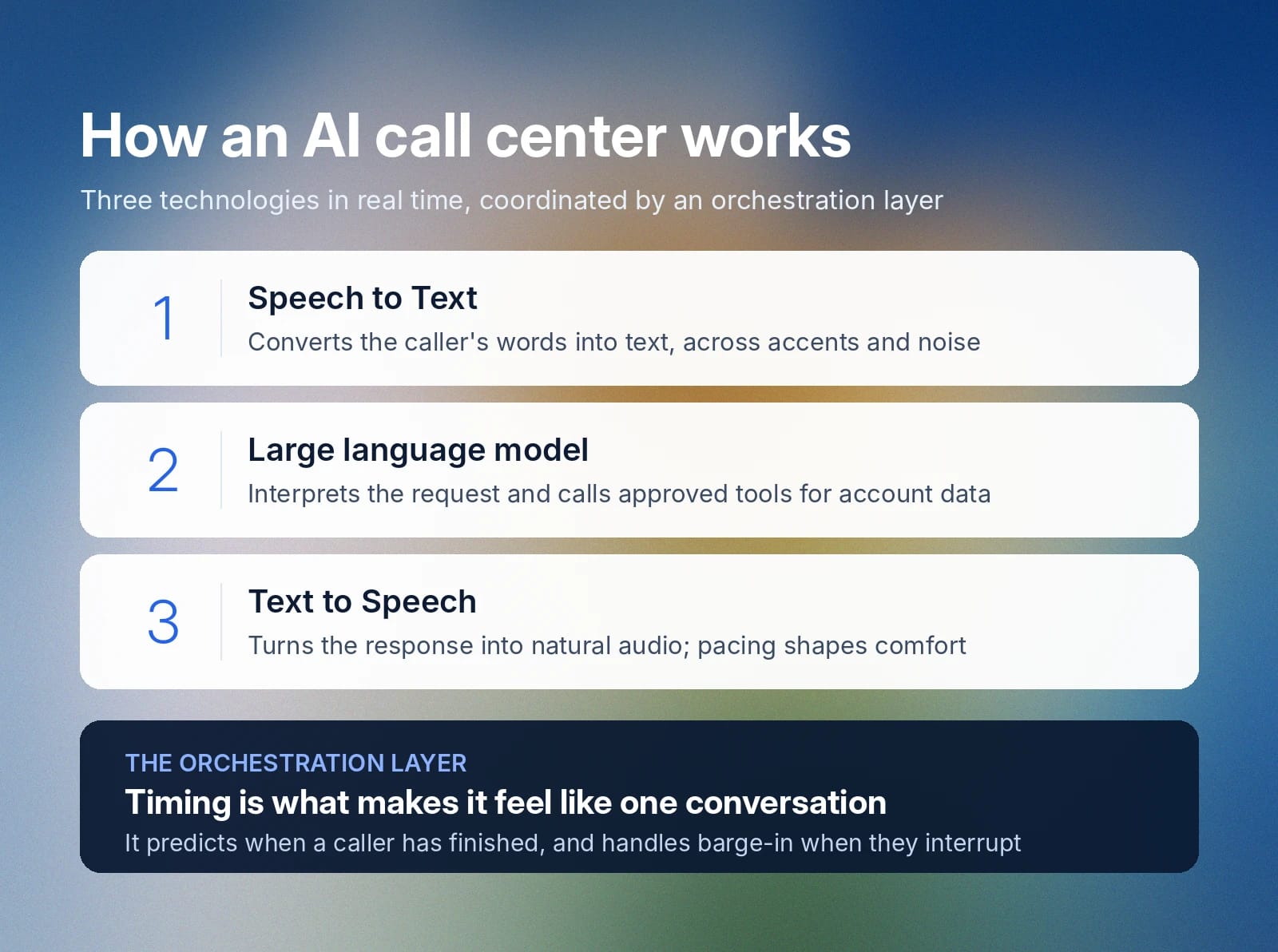
Ein KI-Callcenter basiert auf drei Kerntechnologien, die in Echtzeit zusammenarbeiten und durch eine Orchestrierungsebene koordiniert werden. So funktioniert jede davon in einem typischen Gespräch:
- Speech-to-Text-Modell (STT): Wandelt die Worte des Anrufers in Text um, den ein Large Language Model (LLM) verarbeiten kann. Eine präzise Transkription hilft dem LLM, Anliegen bei unterschiedlichen Akzenten, Sprechgeschwindigkeiten und Hintergrundgeräuschen zu verstehen.
- Large Language Model: Interpretiert das Anliegen des Anrufers und bestimmt die passende Antwort. Es kann außerdem freigegebene Tools nutzen, um Kontodetails abzurufen, Verfügbarkeiten zu prüfen oder auf Informationen aus einer Unternehmenswissensdatenbank zuzugreifen.
- Text-to-Speech-Modell (TTS): Wandelt die vom LLM erzeugte Antwort in natürlich klingendes Audio um. Stimmqualität, Sprechtempo und Antwortgeschwindigkeit beeinflussen, wie angenehm sich das Gespräch anfühlt.
Die Orchestrierungsebene koordiniert diese drei Technologien und die verbundenen Tools während des gesamten Anrufs. Sie überträgt Informationen zwischen ihnen und steuert den Zeitpunkt jeder Antwort, sodass der Austausch wie ein einziges, durchgängiges Gespräch wirkt und nicht wie drei getrennte Systeme, die einander Aufgaben übergeben.
Das Timing sorgt für einen natürlichen Eindruck. Das System erkennt vorher, wann ein Anrufer ausgesprochen hat, statt auf eine deutliche Pause zu warten. Das verkürzt die Verzögerung zwischen den Gesprächszügen. Dieselbe Echtzeitwahrnehmung gilt für Unterbrechungen: Wenn ein Anrufer beginnt, zu sprechen, während der KI-Agent noch antwortet, stoppt das System die Audiowiedergabe, erfasst das gerade Gesagte und passt seine Antwort entsprechend an. Diese Fähigkeit wird manchmal als Barge-in bezeichnet.
Anrufer müssen über all das nicht nachdenken. Eine effektive Orchestrierung lässt die Technologie in den Hintergrund treten, sodass sich die Interaktion natürlich anfühlt und leichter zu navigieren ist als ein herkömmliches Telefonmenü.
Was sind die Kernfunktionen von KI-Callcenter-Software?
KI-Sprachtechnologie kann Anrufe weiterleiten, menschliche Mitarbeitende unterstützen und administrative Aufgaben vor, während und nach jedem Gespräch automatisieren. Diese KI-spezifischen Funktionen machen das möglich.
- Intent-basiertes Routing: Nutzt KI, um die Worte des Anrufers zu analysieren, den Grund des Anrufs zu erkennen und den Anrufer an die passende Warteschlange, Fachkraft oder einen freigegebenen Workflow weiterzuleiten.
- Echtzeitunterstützung für menschliche Mitarbeitende: Stellt menschlichen Mitarbeitenden während eines laufenden Anrufs nützliche Informationen bereit. Dazu gehören das Abrufen von Help-Center-Dokumenten, Antwortvorschläge, Coaching- oder Stimmungssignale sowie Erinnerungen, Hinweise vorzulesen.
- Automatisierte Dokumentation nach dem Anruf: Erstellt Gesprächszusammenfassungen, extrahiert wichtige Details und übermittelt diese Informationen an eine CRM-Plattform. Das reduziert die manuelle Nacharbeit nach einem Anruf.
- KI-gestütztes Qualitätsmonitoring: Transkribiert Anrufe, bewertet sie anhand eines individuellen Bewertungsschemas und markiert Compliance-Probleme oder Coaching-Möglichkeiten. So können Teamleitungen wiederkehrende Probleme wie fehlende Hinweise oder eine schwache Einwandbehandlung erkennen.
KI-Callcenter-Software kann außerdem den Kontext kanalübergreifend vereinheitlichen. Kunden müssen dieselben Informationen nicht jedes Mal wiederholen, wenn sie zwischen Telefon, Chat, E-Mail oder anderen Supportkanälen wechseln. Ist die Plattform mit Tools wie dem CRM-System und der Helpdesk-Software des Unternehmens verbunden, können Mitarbeitende frühere Gespräche, Kontodetails und Anliegen eines Kunden sehen – unabhängig davon, wo das Gespräch begonnen hat.
Was sind die wichtigsten Vorteile von KI in Callcentern?
KI-Kundenservice-Agenten können Routineanrufe bearbeiten, menschliche Mitarbeitende bei Live-Gesprächen unterstützen und auch außerhalb der regulären Geschäftszeiten Service bieten. So entstehen messbare geschäftliche Vorteile.
Niedrigere Betriebskosten
KI kann die Kosten für den Betrieb eines Callcenters deutlich senken, indem sie häufige, wiederholbare Interaktionen automatisiert, statt alles an menschliche Mitarbeitende weiterzuleiten.
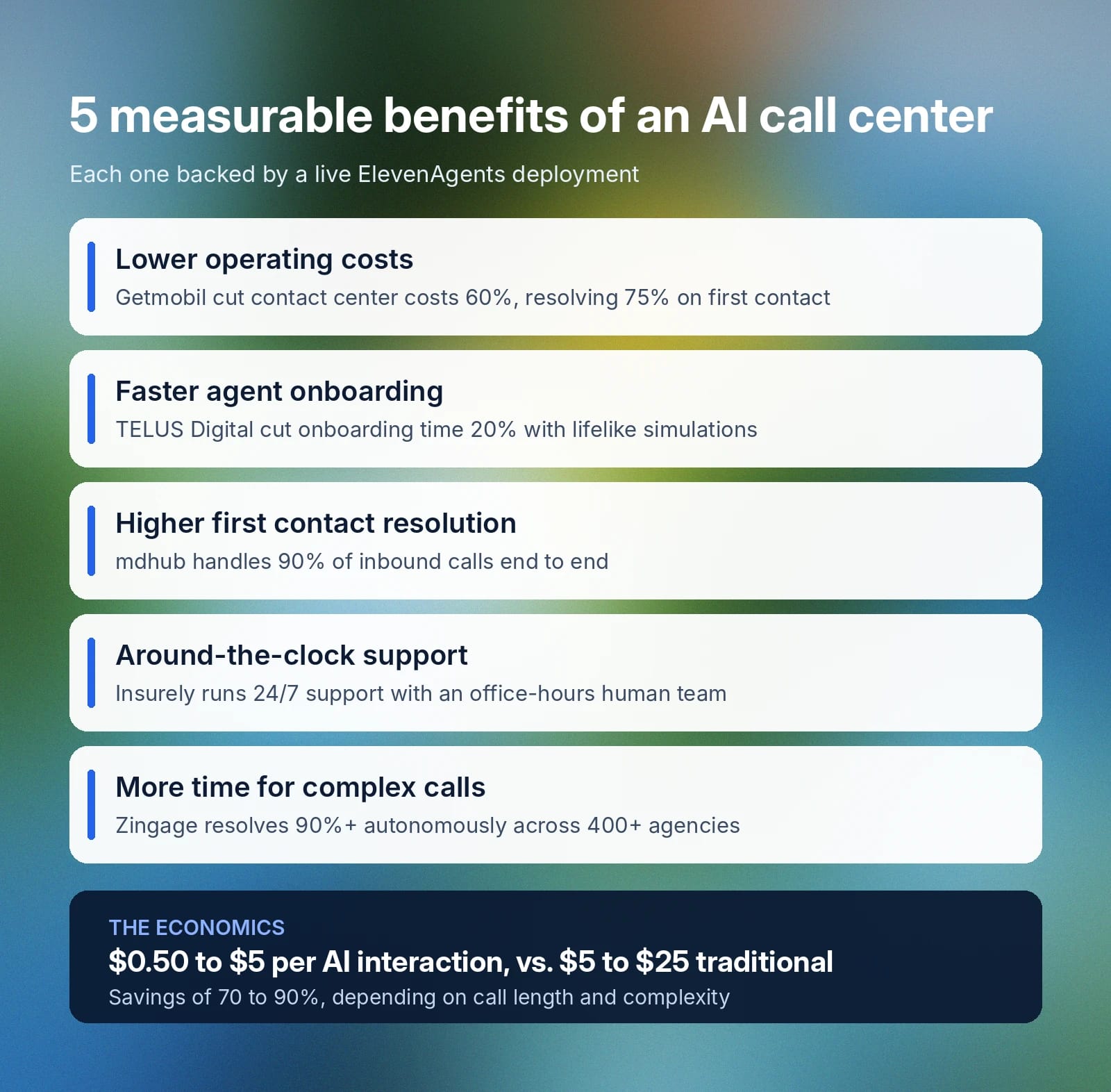
Getmobil setzte ElevenAgents ein – über Telefon, Webchat und WhatsApp hinweg –, um seinen Kundenservice zu automatisieren, für den zuvor bei jeder Anfrage ein menschlicher Mitarbeitender erforderlich war. Nach der Einführung sanken die Contact-Center-Kosten um 60 %. KI-Agenten lösten 75 % der Anfragen beim ersten Kontakt ohne Eskalation.
Schnelleres Onboarding neuer Mitarbeitender
KI kann neuen menschlichen Mitarbeitenden helfen, realistische Kundengespräche zu üben, bevor sie Live-Anrufe entgegennehmen. Sobald sie telefonieren, kann Echtzeitunterstützung freigegebene Antworten, Richtlinien und nächste Schritte bereitstellen. So gewinnen sie Sicherheit und bearbeiten Anrufe konsistenter.
TELUS Digital, das jährlich 20.000 bis 30.000 neue Contact-Center-Mitarbeitende einstellt, nutzte ElevenAgents, um realistische Sprach- und Chatsimulationen für Schulungen zu erstellen. Das Ergebnis war eine um 20 % kürzere Onboarding-Zeit sowie erste Anzeichen für eine geringere Fluktuation.
Höhere Lösungsquoten beim Erstkontakt
KI kann die Lösungsquote beim Erstkontakt verbessern, indem sie Voice Agents mit den Tools und Daten verbindet, die sie benötigen, um ein Anliegen direkt zu lösen – statt es weiterzugeben oder Kunden um einen Rückruf zu bitten.
mdhub, das Kliniken für psychische Gesundheit bei der Patientenaufnahme unterstützt, setzte ElevenAgents ein, um Patientendaten zu erfassen, Versicherungen zu prüfen und Anrufer automatisch dem passenden Anbieter zuzuordnen. Dadurch werden inzwischen 90 % der eingehenden Anrufe vollständig bearbeitet; Mitarbeitende greifen nur ein, wenn ein Fall menschliches Urteilsvermögen erfordert.
Kundenservice rund um die Uhr
KI-Voice-Agents ermöglichen Ihnen hochwertigen Kundenservice rund um die Uhr und reagieren, wenn die Anrufnachfrage die Kapazität Ihres Teams übersteigt. Kunden erhalten nachts, am Wochenende oder bei plötzlichen Anrufspitzen Hilfe. Das verkürzt Wartezeiten und verhindert, dass Routineanfragen auf den nächsten Arbeitstag verschoben werden.
Insurely, ein reiner Online-Anbieter von Versicherungsdaten, nutzt ElevenAgents für Kundenservice rund um die Uhr – sieben Tage die Woche –, obwohl sein menschliches Team reguläre Bürozeiten hat. Benötigt ein Anrufer außerhalb der Geschäftszeiten einen Menschen, vereinbart die KI automatisch einen Rückruf, sobald das Team wieder erreichbar ist. Sie protokolliert das Transkript und fasst Notizen zusammen, bevor der Anruf endet, damit bei der Übergabe nichts verloren geht.
Mehr Zeit für komplexe Kundengespräche
KI-Voice-Agents können Routineanfragen bearbeiten, indem sie sich mit freigegebenen Geschäftssystemen verbinden und vordefinierte Aktionen ausführen. Sie können beispielsweise die Identität eines Anrufers prüfen, bevor sie ein Passwort zurücksetzen, Kontodaten für eine Saldoauskunft abrufen oder ein Terminplanungssystem prüfen, um einen Termin zu bestätigen.
Zingage, eine Betriebsplattform für die häusliche Pflege mit mehr als 400 Agenturen, nutzt ElevenAgents, um über 90 % der Anrufe autonom zu lösen und nur dann an Menschen zu eskalieren, wenn ein Fall dies erfordert. Dadurch verbringen Mitarbeitende weniger Zeit am Telefon und mehr Zeit mit der Pflege.
Callcenter-Automatisierung mit KI: Praktische Beispiele
KI-Callcenter-Automatisierung hilft Unternehmen, häufige Kundenanfragen entlang verschiedener Phasen eines Anrufs zu bearbeiten. Sie kann eingehende Routineanrufe beantworten, ausgehende Kontaktaufnahme unterstützen und den Service außerhalb der Geschäftszeiten oder bei Nachfragespitzen verfügbar halten. Hier sind einige Beispiele aus dem Alltag.
Eingehender Kundensupport
Ruft ein Kunde einen Händler an, um den Status eines verspäteten Pakets zu prüfen, nimmt ein KI-Agent den Anruf über die Supportnummer des Unternehmens entgegen, verifiziert die Identität des Kunden und ruft die aktuellen Sendungsverfolgungsdaten aus dem Bestellsystem ab.
Die KI kann den im Bestellsystem hinterlegten Grund für die Verzögerung mitteilen, den neuen Lieferzeitpunkt nennen und anbieten, den Tracking-Link per SMS zu senden. Erfordert das Anliegen weitere Hilfe, kann sie den Anrufer zusammen mit Bestelldetails und Gesprächskontext an einen menschlichen Mitarbeitenden weiterleiten.
Reception von ElevenAgents übernimmt genau dieses Szenario: Kundenanrufe beantworten, weiterleiten und eingehende Anfragen lösen, bevor sie überhaupt eine menschliche Warteschlange erreichen.
Qualifizierung ausgehender Leads
Wenn ein Softwareunternehmen über seine Website eine neue Demo-Anfrage erhält, kann ein ausgehender KI-Agent den Interessenten anrufen, solange das Interesse noch frisch ist, bestätigen, wonach er sucht, und freigegebene Qualifizierungsfragen stellen.
Auf Basis der Antworten kann der KI-Agent einen Termin mit dem passenden Vertriebsmitarbeitenden vereinbaren oder das Ergebnis zur Nachverfolgung im CRM-System erfassen.
Abdeckung außerhalb der Geschäftszeiten
Erhält ein HLK-Unternehmen dringende Anrufe außerhalb der Geschäftszeiten, etwa bei Extremwetter, kann ein KI-Voice-Agent die Servicenummer beantworten, Kontaktdaten und Adresse des Anrufers erfassen und Fragen stellen, die helfen, die Dringlichkeit des Anliegens zu bestimmen.
Das System kann anschließend ein Serviceticket erstellen, die Details an das Bereitschaftsteam senden oder gemäß den Eskalationsregeln des Unternehmens einen Rückruf für den nächsten Arbeitstag vereinbaren. Dieser Workflow ist ein häufiger Anwendungsfall für einen virtuellen Callcenter-Agenten.
Worauf Sie beim besten KI-Callcenter-Agenten achten sollten
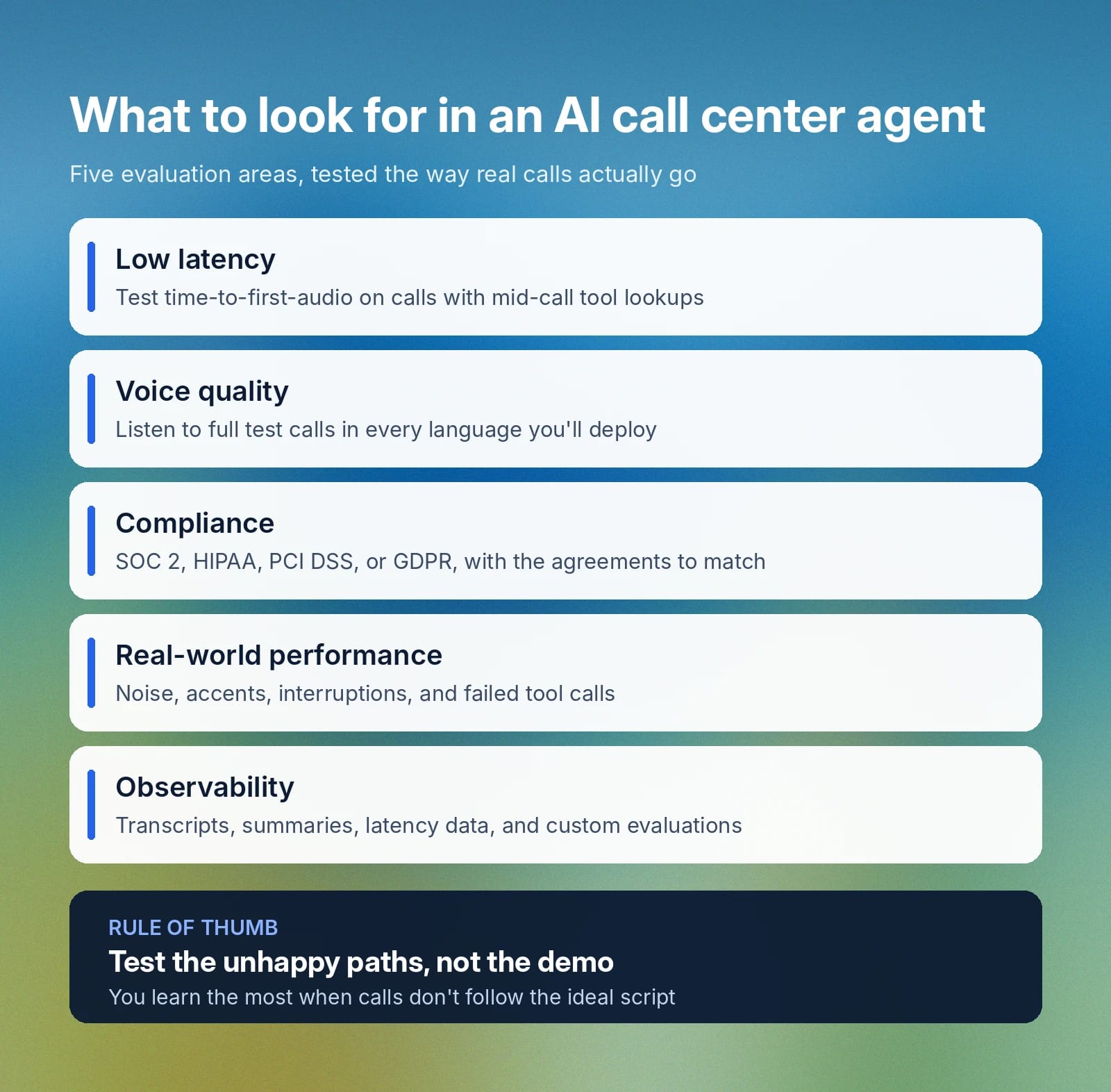
Der beste KI-Callcenter-Agent sollte in realen Kundengesprächen zuverlässig arbeiten und Ihrem Team ausreichend Transparenz bieten, um seine Arbeit zu bewerten und zu verbessern.
Latenz über die gesamte Interaktion hinweg testen
Eine niedrige Latenz ermöglicht es dem Agenten, innerhalb von ein oder zwei Sekunden zu antworten, sodass sich das Gespräch natürlich anfühlt. Längere Pausen können das System reaktionslos wirken lassen, Anrufer dazu bringen, sich zu wiederholen, oder das Vertrauen schwächen, weil offensichtlich wird, dass sie mit einem Computer sprechen.
Bei der Bewertung der Latenz sollten Sie besonders auf die Time-to-First-Audio (TTFA) achten. Die TTFA ist die gesamte Zeitspanne zwischen dem Ende der Äußerung eines Anrufers und dem Moment, in dem er die Antwort des Agenten hört. Sie umfasst daher die Zeit für Modellinferenz, Netzwerk-Roundtrips, Spracherkennung, LLM-Verarbeitung und Audiopufferung.
Fragen Sie Anbieter gezielt nach der TTFA und testen Sie sie selbst mit realistischen Szenarien, bei denen der Agent während des Anrufs eine Bestellung nachschlagen, einen Kalender prüfen oder Kontodaten abrufen muss. Genau dann treten Verzögerungen tatsächlich auf. Die Antworten sollten konsistent bleiben, auch während der Agent eine Aktion ausführt – nicht nur, wenn er aus dem Gedächtnis antwortet.
Stimmqualität in echten Gesprächen bewerten
Zur Stimmqualität gehören Klarheit, Sprechtempo, Aussprache, Tonfall und der Umgang des Agenten mit Pausen. Die Stimme sollte während des gesamten Gesprächs gut verständlich bleiben und die Begriffe korrekt aussprechen, die Ihre Kunden häufig verwenden.
Hören Sie sich vollständige Testanrufe an statt kurzer Stimmbeispiele. Eine Stimme, die in einer vorbereiteten Demonstration überzeugend klingt, kann sich in einem längeren Austausch mit Unterbrechungen oder wechselnden Emotionen anders verhalten.
Wenn Sie in mehreren Sprachen bereitstellen, hören Sie sich die Stimme in jeder einzelnen an. Qualität und Natürlichkeit können bei demselben Anbieter je nach Sprache deutlich variieren, selbst wenn die englische Demo hervorragend klingt.
Compliance- und Sicherheitskontrollen überprüfen
Die Plattform sollte die für Ihren geplanten Einsatz erforderlichen Sicherheits-, Datenschutz- und Governance-Kontrollen bieten. Abhängig vom Unternehmen und den betroffenen Informationen kann dies die Unterstützung von Standards oder Vorschriften wie SOC 2, HIPAA, PCI DSS oder der Datenschutz-Grundverordnung (DSGVO) umfassen.
Prüfen Sie, ob die Plattform Kundendaten verschlüsselt, rollenbasierte Zugriffskontrollen unterstützt, Audit-Logs führt und erforderliche Vereinbarungen anbietet, etwa eine Vereinbarung für Geschäftspartner.
Käufer sollten außerdem klären, welche Einstellungen ihr Team konfigurieren muss und wer für Zugriffsverwaltung, Datenaufbewahrung und die Reaktion auf Sicherheitsvorfälle verantwortlich ist.
Leistung unter realen Bedingungen testen
Ein Voice Agent sollte unter den Bedingungen getestet werden, denen er nach dem Launch begegnet. Dazu gehören Anrufer mit Mobiltelefonen, unterschiedlichen Akzenten, Anrufe aus lauten Umgebungen, Unterbrechungen des Agenten oder unerwartete Antworten.
Berücksichtigen Sie auch Szenarien, in denen Tool-Aufrufe fehlschlagen, Kundeninformationen unvollständig sind oder ein Anliegen an einen menschlichen Mitarbeitenden eskaliert werden muss.
Stellen Sie sicher, dass der Agent das Problem klar kommuniziert, den richtigen Fallback-Workflow befolgt und den Gesprächskontext an den nächsten Mitarbeitenden übergibt. So sehen Sie, wie das System arbeitet, wenn Anrufe nicht dem idealen Ablauf folgen.
Sicherstellen, dass Sie jeden Anruf überwachen und prüfen können
Observability bietet Ihrem Team einen klaren Überblick darüber, was in jedem Gespräch passiert ist. Achten Sie auf Anrufaufzeichnungen, Transkripte, Zusammenfassungen, Latenzdaten, Ergebnisse von Tool-Aufrufen und anpassbare Bewertungskriterien.
Diese Aufzeichnungen helfen Teams, wiederkehrende Probleme zu erkennen, einzelne Anrufe zu prüfen und die Prompts, das Wissen und die Workflows des Agenten im Lauf der Zeit zu verbessern.
Welche Faktoren beeinflussen die Preise für KI-Callcenter?
Die Preise für KI-Callcenter hängen in der Regel von Nutzung, Infrastruktur und den in der Plattform enthaltenen Services ab. Ein Vergleich allein anhand des beworbenen Minutenpreises kann wichtige Kosten außer Acht lassen.
Mehrere Faktoren können die Gesamtkosten beeinflussen:
- Monatliches Anrufvolumen
- Durchschnittliche Gesprächsdauer
- Anzahl gleichzeitiger Anrufe
- Anforderungen an Sprache und Stimme
- Gebühren für Telefonanbieter
- Modellauswahl
- Integrationen und individuelle Tools
- Analysen, Speicherung und Support
Gängige Preismodelle
Anbieter können eines oder mehrere der folgenden Preismodelle verwenden:
- Preis pro Minute: Die Gebühren richten sich nach der Dauer jedes Anrufs.
- Monatliche Tarife: Eine wiederkehrende Gebühr umfasst ein festgelegtes Nutzungsvolumen. Bei Überschreitung fallen zusätzliche Kosten an.
- Nutzungsbasierte Komponenten: Spracherkennung, Sprachmodelle, Sprachgenerierung, Telefonservice und verbundene Tools können separat abgerechnet werden.
- Enterprise-Verträge: Die Preise können vereinbartes Volumen, Supportanforderungen, Sicherheitsfunktionen oder individuelle Integrationen berücksichtigen.
Die tatsächlichen Kosten pro Minute berechnen
Eine einfache Formel hilft Käufern, Preismodelle konsistenter zu vergleichen:
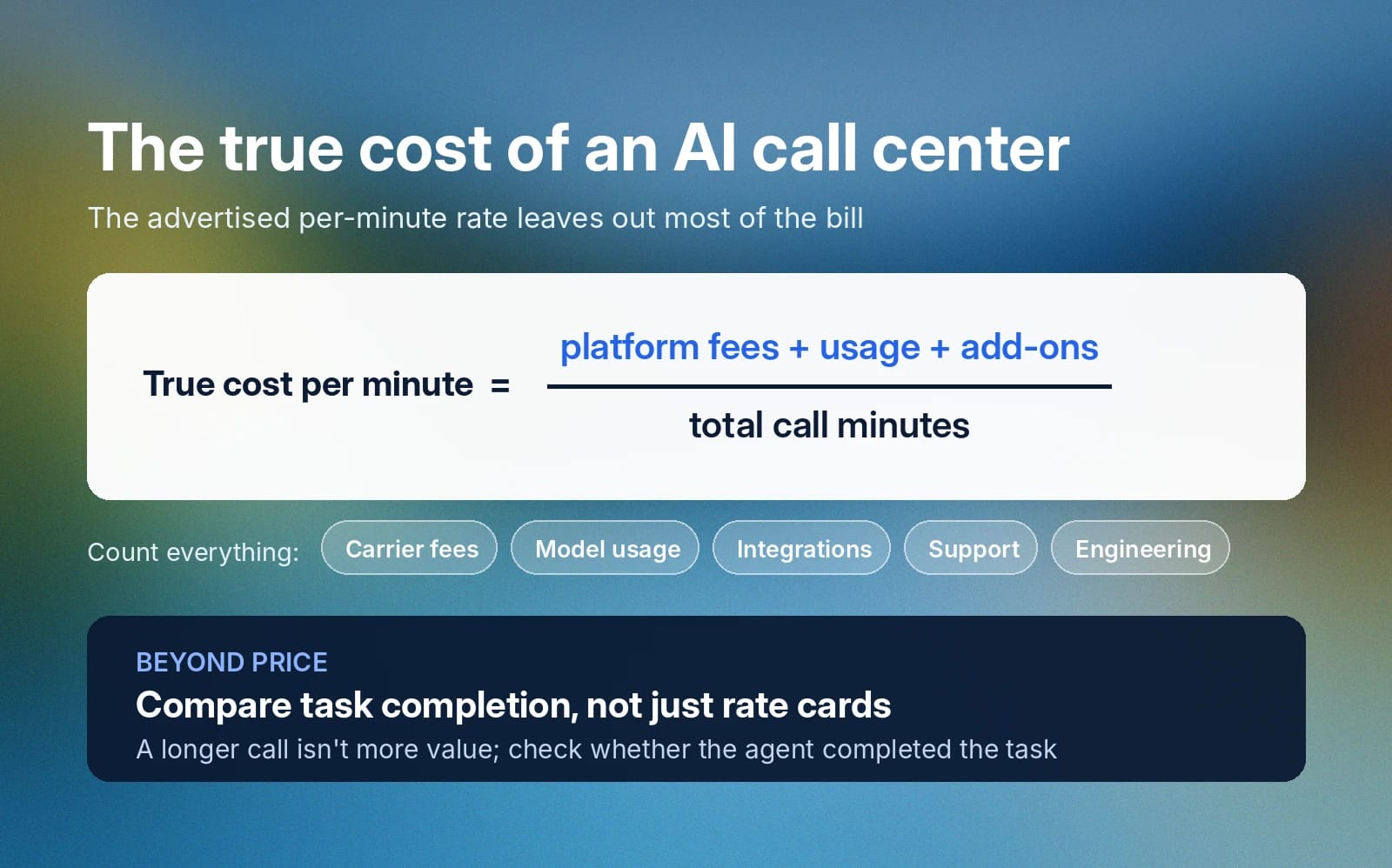
Tatsächliche Kosten pro Minute = (monatliche Plattformgebühren + nutzungsabhängige Gebühren + Zusatzleistungen) ÷ gesamte Anrufminuten
Die Berechnung sollte Telefonservice, Modellnutzung, Integrationen, Support sowie alle internen Engineering- oder Wartungsaufwände für den Betrieb des Systems einschließen.
Die tatsächlichen Kosten pro Minute sind nur ein Teil der Entscheidung. Käufer sollten auch Aufgabenerledigung, Weiterleitungsquoten, Kundenerfahrung, Zuverlässigkeit und den Umfang der administrativen Arbeit vergleichen, die das System abnimmt.
Ein längerer Anruf schafft nicht immer mehr Wert. Teams sollten daher auch berücksichtigen, ob der Agent die vorgesehene Aufgabe erledigt.
Eine ausführlichere Analyse der finanziellen Unterschiede finden Sie im vollständigen Vergleich der Kosten von KI- und herkömmlichen Callcentern.
Eigene Infrastruktur vs. verwaltete Plattformen
Unternehmen können ein KI-Callcenter aus separaten Anbietern für Speech to Text, Sprachmodelle, Text to Speech und Telefonie zusammenstellen. Dieser Ansatz gibt technischen Teams mehr Kontrolle, erfordert aber auch, dass sie die Orchestrierungsebene, Integrationen, Monitoring und Sicherheitskontrollen aufbauen und warten sowie das System fortlaufend aktualisieren.
Verwaltete Plattformen bündeln die Kerntechnologien – darunter Spracherkennung, Sprachmodelle, Sprachsynthese und Orchestrierung – in einem einzigen Service. Der Preis kann zwar höher sein als bei der separaten Bezahlung dieser Komponenten, umfasst aber häufig integrierte Integrationen, Monitoring-Tools, Sicherheitsfunktionen und die laufende Plattformwartung, die sonst interne Engineering-Ressourcen erfordern würden.
Starten Sie mit ElevenAgents für fortschrittliche KI-Callcenter
Die Transformation Ihres Kundensupports erfordert keinen vollständigen Neuaufbau Ihres Technologie-Stacks.
ElevenAgents vereint den gesamten Voice Stack – von der Spracherkennung bis zur Sprachgenerierung – in einer orchestrierten Plattform. Sie ist nach SOC 2 Type II und ISO 27001 zertifiziert, erfüllt PCI DSS Level 1 und unterstützt HIPAA- sowie DSGVO-Anforderungen.
Ob Sie einen automatisierten Support für eingehende Anfragen aufbauen, Kampagnen für ausgehende Leads durchführen oder menschlichen Mitarbeitenden Live-Unterstützung in Echtzeit bieten möchten: ElevenAgents liefert Ihnen die passenden Tools. Erstellen Sie jetzt Ihren ersten KI-Agenten oder sprechen Sie mit unserem Team, um zu erfahren, wie wir Ihnen helfen können, KI noch heute in Ihr Callcenter zu bringen.
Häufig gestellte Fragen

Jack Limebear ist Teil des Growth-Teams und arbeitet als Content Writer und Stratege für Blog- und Insights-Seiten. Vor ElevenLabs leitete er über zehn Jahre die Content-Strategie für Unternehmen – von schnell wachsenden SaaS-Startups bis zu Fortune-500-Konzernen. Er hat einen Masterabschluss in Englischer Literatur von der University of Cambridge.