
Medicinsk speech to text: Förvandlar klinisk dokumentation
- Skriven av
- Jack Limebear
- Publicerad
- Senast uppdaterad
LyssnaLyssna på den här artikeln
Klockan är 22.52. Väntrummet tömdes för en timme sedan, men jourläkaren sitter fortfarande vid sitt skrivbord och går mentalt igenom dagen för att återskapa tidigare besök under sitt pass, helt ur minnet. Patientens rapporterade symtom, den subtila ändringen i uppföljningsplanen, uppgiften om en läkemedelsinteraktion, den exakta dosen som gavs vid en viss tidpunkt.
Utan korrekt dokumentation är dessa detaljer flyktiga. Om läkaren glömmer att skriva ned dem under samtalet måste de minnas dem i efterhand när journalen ska föras. Det är en nivå av osäkerhet som är oacceptabel i de flesta yrkessituationer och som ständigt tvingar läkare att snabbt klottra ned anteckningar från varje möte och transkribera dem manuellt senare.
Medicinsk tal till text (STT) minskar den här bördan genom att omvandla kliniska samtal till strukturerad och korrekt dokumentation i samma stund som de sker. Anteckningarna är sammanställda och korrekta när läkaren går vidare till nästa patient.
I den här artikeln beskriver vi varför medicinsk STT-programvara är viktig, vad den är, hur den fungerar och hur vårdinrättningar världen över redan drar nytta av den.
Sammanfattning
- Medicinsk tal till text kombinerar taligenkänning med identifiering av klinisk terminologi för att omvandla muntliga möten till strukturerad, EHR-färdig dokumentation.
- Den bästa programvaran för medicinsk diktering behåller hög precision trots accenter och buller, och erbjuder talardiarisering, låg latens och inbyggda efterlevnadskontroller.
- Ordfelfrekvens är det centrala måttet på precision för medicinsk STT-programvara, där specialiserade medicinska modeller täpper till luckor som allmänna transkriptionsverktyg inte kan hantera.
- API- och webhook-åtkomst gör att medicinsk STT kan kopplas till befintliga EHR-workflows utan att hela plattformen behöver bytas ut.
- Programvara för medicinsk diktering har många praktiska användningsområden, där STT hjälper till att minska bördan av manuell datainmatning över hela verksamheten.
Vad är medicinsk tal till text och hur fungerar det?
Medicinsk tal till text omvandlar talat kliniskt språk till korrekta skriftliga journaler. Oavsett om en läkare dikterar sina anteckningar eller ett samtal med en patient transkriberas live, hjälper medicinsk STT till att snabba upp alla dokumentationsworkflows. Till skillnad från allmänna transkriptionsverktyg kan den känna igen medicinsk terminologi, kliniska förkortningar, läkemedelsnamn och specifikt ordförråd som vårdpersonal använder i sina dagliga arbetsuppgifter.
Medicinsk transkribering i realtid fångar samtal medan de sker, vilket gör den användbar för att dokumentera samtal med patienter, snabba upp anteckningar till journalen och registrera samtal för patienttriage. Den prioriterar precision framför hastighet och ger användare den exakthet de behöver i samtal med specifikt fackspråk, där det är avgörande att registrera rätt procedurer och läkemedel.
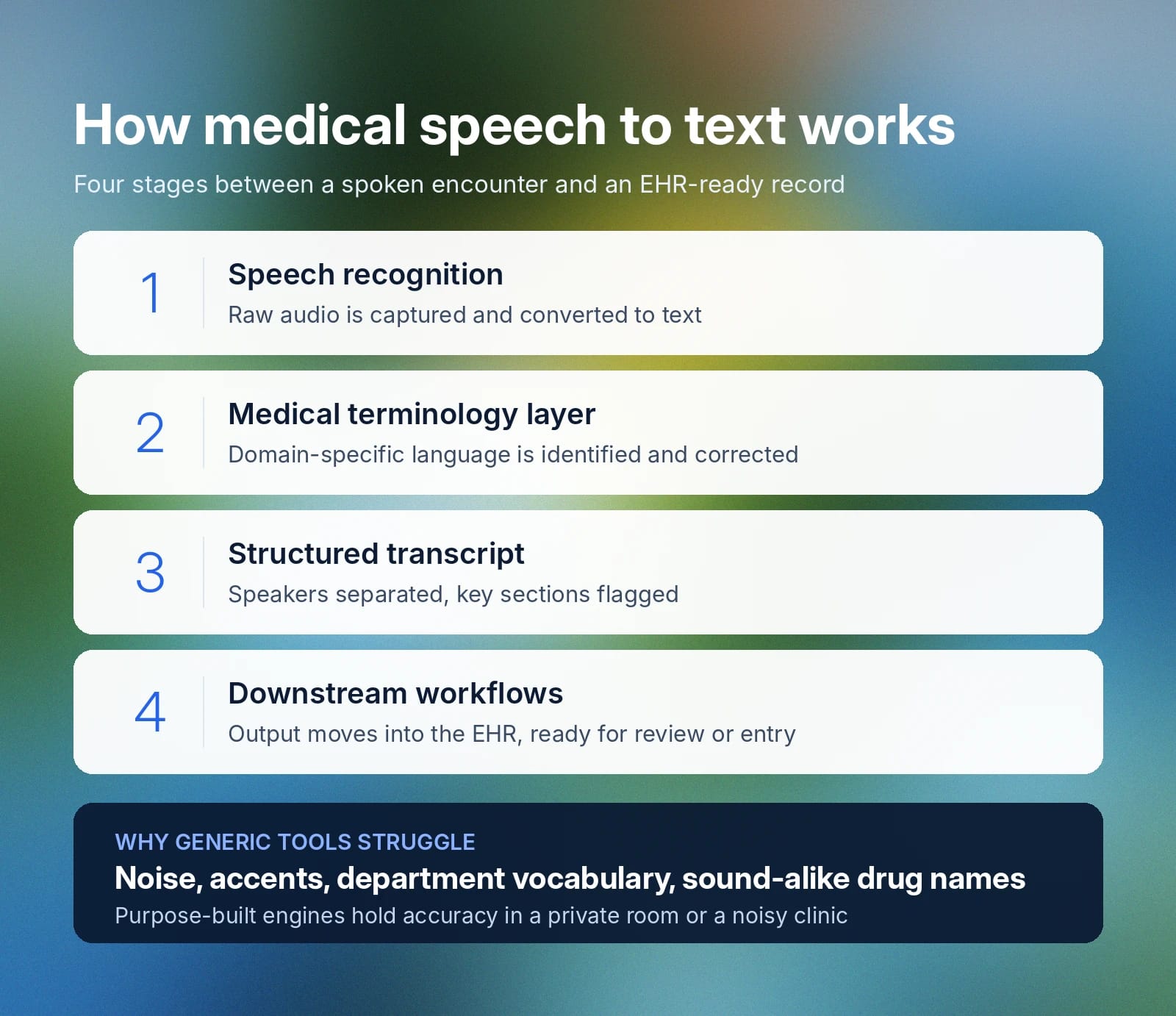
Det generella STT-flödet består av fyra huvudsteg. Ett verktyg för automatisk taligenkänning fångar råljudet och omvandlar det till text, varefter ett lager för medicinsk terminologi identifierar och korrigerar domänspecifikt språk. Systemet organiserar sedan den korrigerade texten i ett strukturerat transkript, ofta genom att separera talare och markera textavsnitt. Dessa strukturerade resultat går sedan vidare till efterföljande workflows eller EHR, redo för granskning eller registrering.
En återkommande utmaning inom medicinsk transkribering är att faktorer som bakgrundsbuller, regionala accenter, skiftande ordförråd mellan olika avdelningar och läkemedelsnamn som låter lika skapar hinder för generella STT-verktyg. Tal-till-text-motorer som är byggda särskilt för vården kan övervinna alla dessa utmaningar och ge hög precision, oavsett om de används i ett privat rum eller på en bullrig klinik.
Viktiga funktioner i den bästa programvaran för medicinsk diktering
Den bästa programvaran för medicinsk diktering är byggd för kliniska miljöer med en djup kontextuell förståelse för branschen.
För att ge hög precision och konsekvent resultat med låg latens innehåller ledande programvara följande funktioner:
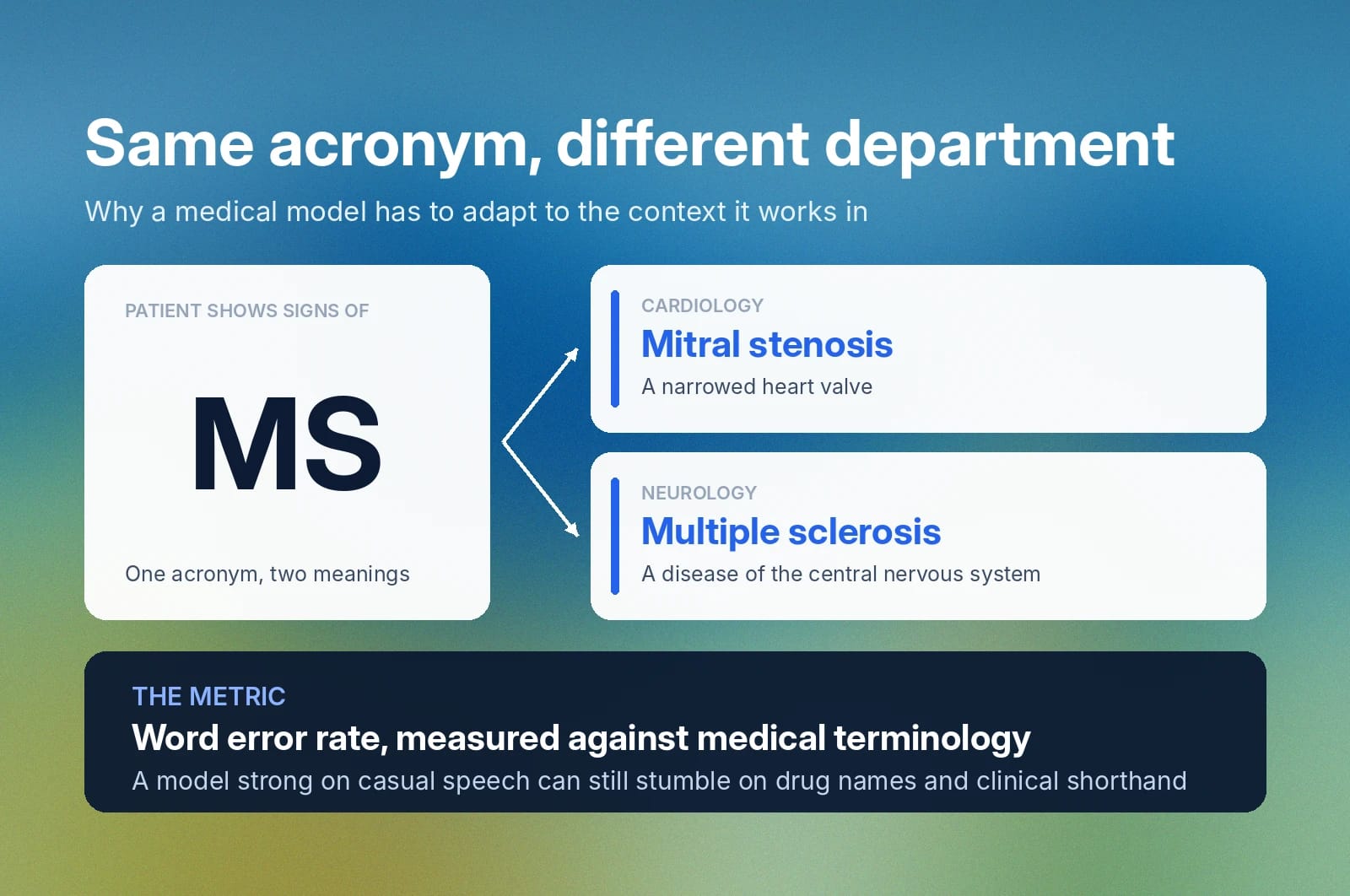
- Stöd för medicinskt ordförråd och terminologi: En transkriptionsmodell som har tränats på kliniskt ljud måste känna igen läkemedelsnamn, doser (och olika enheter), fältspecifik terminologi och diagnoser för att effektivt kunna transkribera information åt vårdpersonal. Nyckelordsstyrning gör det möjligt för medicinsk STT att korrekt fånga potentiellt hundratals mycket specifika termer.
- Hög precision för accenter och bullriga miljöer: Även i mycket bullriga miljöer med mycket bakgrundsljud måste den bästa programvaran för medicinsk diktering kunna filtrera bort externa ljud utan att försämra kvaliteten på talarens ljud.
- Talardiarisering: Att kunna skilja mellan vad en patient och en läkare har sagt är avgörande i alla samtal med flera deltagare. Vid granskning av transkriberingar hjälper en medicinsk STT-plattform med talardiarisering till att tydligt markera vilken yttring som tillhör vilken person.
- Transkribering i realtid med låg latens: Live-dokumentation kräver programvara för medicinsk diktering som kan följa samtalets tempo. Om latensen är för hög kan programvaran missa viktiga delar av diskussionen under bearbetningen och lämna luckor i anteckningarna som kan få allvarliga konsekvenser. Läs vår arkitekturguide för förbättrad Speech to Text för tips om hur du minskar latensen för tal till text i realtid.
- EHR-integration och API-åtkomst: Strukturerade resultat ska kunna flöda vidare till anslutna system via API eller webhook, utan att klinisk personal tvingas ändra sitt nuvarande arbetssätt.
- HIPAA-efterlevnad och säkerhetskontroller: Nollagringsläge bearbetar ljud utan att lagra det, vilket innebär att känsliga patientsamtal aldrig hamnar i långtidslagring. Ledande plattformar lägger till efterlevnadsövervakning och workflow-optimering utan att någonsin behålla personligt identifierbar information (PII).
- Flerspråkigt stöd: Patienter och kliniker som kommunicerar på olika språk behöver ett transkriptionsverktyg som fungerar på de olika språk de möter. Engelska är ofta ett av de huvudsakliga språken som stöds av medicinska tal-till-text-verktyg, men det är långt ifrån det enda språk vårdgivare möter varje dag.
- Skyddsräcken för hälso- och sjukvård: Skyddsräcken för medicinska AI-agenter bör hindra systemet från att diagnostisera tillstånd, rekommendera behandling, besvara frågor om fakturering eller ge doseringsråd. Dessa skyddsräcken håller varje interaktion inom de gränser som en legitimerad kliniker vill sätta och hjälper till att integrera AI-teknik i medicinska workflows utan att riskera bristande efterlevnad.
- Vårdspecifika certifieringar: Leta efter certifieringar som är anpassade för vården, inklusive HIPAA, NHS Data Security and Protection Toolkit i Storbritannien och HDS-certifiering i Frankrike. Dessa ingår i ett större sammanhang av GDPR-intygande, SOC 2 Type II och ISO 27001-efterlevnad.
Med dessa funktioner kan en medicinsk transkriberare arbeta tillsammans med vårdpersonal och samtidigt upprätthålla full efterlevnad. Den kan dokumentera ärendedetaljer och fånga samtalsdetaljer i realtid, vilket bidrar till mer korrekta och konsekventa journalanteckningar.
Säkerställa korrekt medicinsk transkribering inom vården
Precision är det främsta målet för alla medicinska tal-till-text-assistenter, eftersom även små fel i transkriberingen kan få farliga följder. En feltranskriberad dos eller ett annat läkemedel i journalen kan få allvarliga konsekvenser för både patienter och läkare. Därför ställer vården betydligt högre krav på transkriberingsprecision än andra branscher.
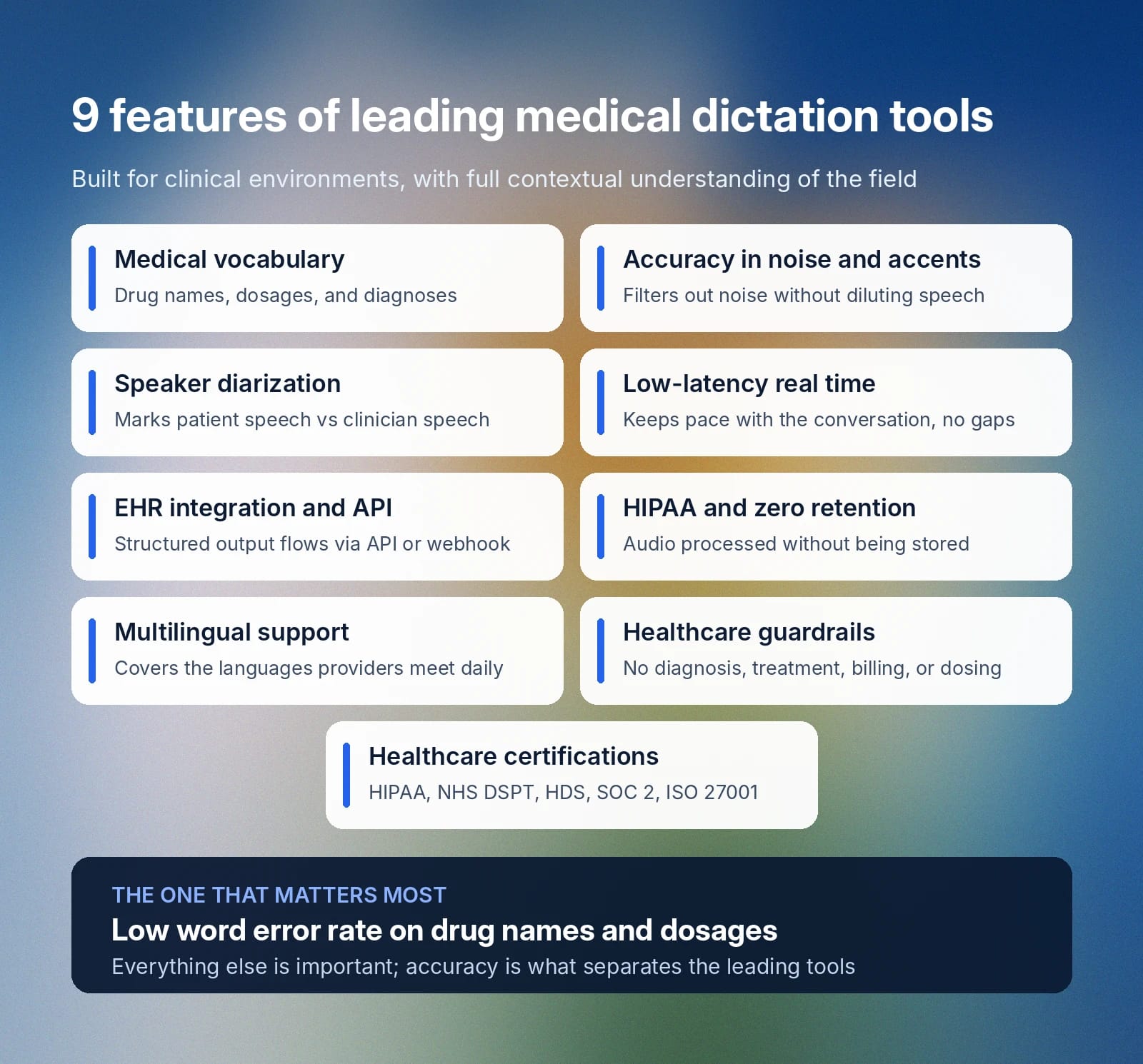
Ordfelfrekvens, alltså den totala andelen ord som en transkribering får fel, är standardmåttet på precision för STT-verktyg. I en klinisk miljö bör WER bedömas utifrån medicinsk terminologi, eftersom en modell som fungerar bra för vardagligt tal kanske inte klarar läkemedelsnamn lika bra.
Modeller kan använda flera olika metoder för att överbrygga dessa luckor. Medicinska tal-till-text-modeller behöver tränas specifikt på kliniskt ljud och terminologi. De har ofta en bred grund i allmänt tal, men den här avancerade domänspecifika träningen bidrar till bättre precision i det specifika område där de ska användas.
Modellleverantörer bygger också anpassade ordförråd som omfattar specialitetsspecifika termer, läkemedelsformler, förkortningar inom verksamheten eller medicinska termer som sannolikt återkommer ofta. Mänskliga granskare kontrollerar även gränsfall innan de når den permanenta journalen, och människa i loopen är fortfarande att föredra för dokumentation med höga insatser.
En annan viktig faktor för korrekt medicinsk transkribering är förmågan att anpassa sig till olika kontexter. Om en kardiolog exempelvis noterar att patienten har tecken på MS, syftar det sannolikt på mitralisstenos. Samma förkortning kan på en annan avdelning, till exempel neurologi, betyda multipel skleros. Förkortningen är densamma, men avdelningens kontext avgör vad den sannolikt betyder.
En modell behöver lära sig att anpassa sig till den kontext där den sannolikt kommer att användas för att kunna ge en konsekvent låg WER.
Integrera röstigenkänning med elektroniska patientjournaler
Programvara för röstigenkänning hjälper till att komplettera elektroniska patientjournaler (EHR) med patientinformation. Transkriptionslagret omvandlar talade möten till strukturerad text och skickar sedan resultatet dit det behövs, via ett API, en webhook eller en röstagent som hanterar samtalet.
Vanliga resultat är kliniska anteckningar, SOAP-anteckningar (Subjective, Objective, Assessment och Plan) samt utskrivningssammanfattningar med information till nästa vårdgivare i kedjan. Alla dessa format följer en relativt standardiserad struktur, vilket gör dem väl lämpade för automatisering.
ElevenLabs tillhandahåller API- och webhook-infrastrukturen som gör den här integrationen möjlig, och partner i hela vårdekosystemet kan bygga direkta EHR-kopplingar ovanpå den. Det gör den underliggande transkriptions- och rösttekniken tillräckligt flexibel för att passa det EHR som din vårdinrättning redan använder.
Röstagenter som bygger på den här infrastrukturen behöver också kunna prata med patienter, inte bara transkribera deras röst. Därför är funktioner för Text to Speech API-integration viktiga vid sidan av transkriberingsprecision.
Tillsammans bidrar dessa tjänster till att minska mängden manuell datainmatning som läkare behöver utföra efter ett avslutat pass. Varje minut som inte går åt till att skriva är en minut som din organisation kan ge tillbaka till patienterna, samtidigt som behovet av tidskrävande manuell inmatning minskar.
Praktiska användningsområden för AI-agenter inom vården och medicinsk STT
Oavsett om det handlar om arbete på ett medicinskt callcenter eller om att föra kliniska anteckningar live med en patient, effektiviserar en AI-agent informationsflödet från samtal till journal, minskar manuell datainmatning och frigör tid för personalen.
Här är några av de främsta praktiska användningsområdena för AI-agenter inom vården och medicinsk STT.
Öppenvårdskliniker och läkare
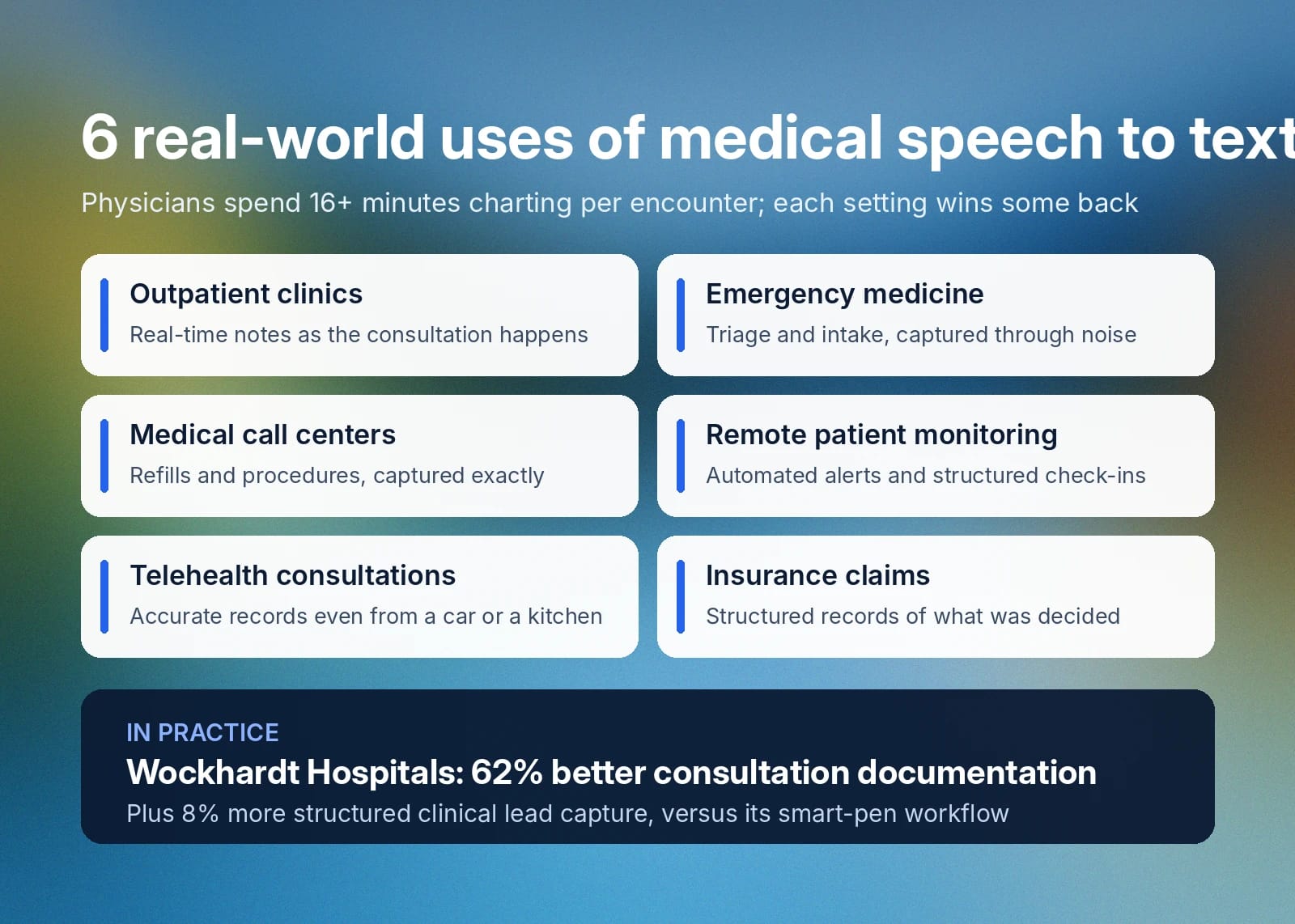
I genomsnitt lägger läkare mer än 16 minuter på journalföring för varje patientmöte. Under ett helt arbetspass blir det en enorm tidsförlust. Med en AI-agent för vården som automatiskt transkriberar medicinskt innehåll kan dina kliniker få tillbaka tid för journalföring och fokusera på patientvård och triage.
Wockhardt Hospitals integrerade ElevenLabs Speech to Text API i ClinicIQ, sin AI-stödda plattform för klinisk dokumentation, för att transkribera läkare-patient-samtal till patientjournaler i realtid. ElevenLabs Speech to Text API fångade korrekt läkemedelsnamn, doser och diagnoser, som "Metformin 500 mg två gånger dagligen" eller "typ 2-diabetes", i konsultationer på blandad engelska och regionala språk i Wockhardts kliniska plattform.
Wockhardt såg i genomsnitt en förbättring på 62 % i dokumentationen av konsultationer och en ökning på 8 % i insamlingen av strukturerade kliniska leads, jämfört med sitt tidigare workflow baserat på smarta pennor.
Sjukhus och akutsjukvård
Akutmottagningar behöver triagera patienter och dokumentera inskrivningar i realtid, ofta med mycket bakgrundsbuller. När flera personer arbetar med varje fall är talardiarisering också ett viktigt tillägg, eftersom den hjälper till att tydligt skilja på vem som talar i ett transkript. Exakt medicinsk STT-programvara som är byggd för dessa miljöer passar naturligt in i befintliga workflows utan att bromsa akutteam.
Medicinska callcenter
Callcenter hanterar stora mängder samtal, från rutinärenden till fallspecifika frågor, såsom begäran om receptförnyelse eller frågor om procedurer eller försäkringsskydd. För att AI-agenter inom vården ska kunna svara korrekt på varje fråga är det avgörande att STT-programvaran ger ett korrekt transkript av medicinska termer, exempelvis receptnamn, doser och procedurnamn.
Fjärrövervakning och triage av patienter
Vid övervakning av patienter på distans kan AI-agenter inom vården omedelbart ringa jourpersonalen när patientens vitala värden hamnar utanför normalintervallet. I mindre kritiska fall kan agenten i stället ringa patienten för att följa upp, och till och med genomföra en strukturerad klinisk bedömning för att samla in information i realtid.
Ett system som automatiserar larm och triage minskar belastningen på vårdpersonal och ger samtidigt patienter på distans högkvalitativ hjälp när det behövs.
Telehälsokonsultationer
Patienter som ansluter till telehälsosamtal kan göra det varifrån som helst. Oavsett om de sitter i en bil, på ett bullrigt kontor eller hemma i köket kan bakgrundsbuller göra det svårt för traditionell STT-programvara att fånga detaljerna i ett samtal.
Avancerad medicinsk STT löser problemet och ger korrekt medicinsk dokumentation även när ljudkvaliteten i ett telehälsosamtal är låg.
Försäkringsanspråk och dokumentation
Handläggning av anspråk kräver korrekta, strukturerade register över vad som diskuterades och beslutades under ett besök. Ett automatiserat transkriptionssystem kan fånga hela bredden av detaljer som krävs i dessa samtal, minska kontakterna mellan vårdgivare och betalare samt effektivisera framtagningen av försäkringsdokument.
Bygg workflows för vårdtranskribering med ElevenAgents
Mer än inom nästan alla andra områden kräver medicinsk tal till text hög precision, låg latens och kontextbaserat domänbyte för att konsekvent kunna stödja vårdpersonal. STT-system behöver integreras direkt i befintliga workflows så att läkare kan förenkla journalföring och anteckningar från patientsamtal.
ElevenAgents kombinerar transkribering med hög precision med konfigurerbara skyddsräcken, låg latens och ett naturligt samtalsflöde som passar interaktioner inom vården.
Utforska kundberättelser om ElevenAgents för att se hur team använder plattformen för vårdens domänspecifika behov, eller kontakta försäljning för att skapa ett workflow anpassat till din vårdmiljö.
Vanliga frågor om medicinsk tal till text
Jack Limebear jobbar i Growth-teamet och skriver innehåll samt planerar strategier för bloggen och insiktssidorna. Innan ElevenLabs ledde han innehållsstrategi i över tio år för allt från snabbt växande SaaS-startups till Fortune 500-företag. Han har en masterexamen i engelsk litteratur från University of Cambridge.