
Conversational AI dla HR: przyszłość zasobów ludzkich
- Autor
- Jack Limebear
- Opublikowano
- Ostatnia aktualizacja
PosłuchajPosłuchaj tego artykułu
Od tysięcy CV kandydatów po setki wewnętrznych pytań pracowników — zespoły HR toną w pracy. To one napędzają rozwój firmy, zatrudniając kluczowe osoby i dbając o zadowolenie obecnych pracowników, dlatego potrzebują wszelkiego wsparcia, by cały cykl życia pracownika przebiegał sprawnie.
Najnowsze badania Gartnera wskazują, że rozwiązaniem może być sztuczna inteligencja. Do 2030 r. aż 60% wszystkich zadań HR będzie wykonywać AI. Automatyzacja obejmie wiele codziennych zadań zespołów HR, takich jak odpowiadanie na pytania pracowników czy dodawanie nowych osób do systemu płacowego.
AI jest już szeroko wykorzystywana w HR — od agentów AI do rekrutacji po wewnętrzne chatboty HR do samoobsługi, które pomagają pracownikom znaleźć informacje.
W tym artykule omawiamy Conversational AI w HR — od pierwszej rozmowy rekrutacyjnej po offboarding — oraz to, co jest potrzebne do skutecznego wdrożenia.
Podsumowanie
- Conversational AI w HR (nazywana też chatbotami HR) rozumie intencję i kontekst, dzięki czemu niezawodnie wspiera pracowników i kandydatów.
- AI w HR obejmuje cały cykl życia pracownika — od onboardingu po offboarding.
- Główne zastosowania obejmują pozyskiwanie talentów, planowanie rozmów, szkolenia pracowników, onboarding, samoobsługę i rozmowy końcowe.
- Bezpieczeństwo i zgodność z przepisami są niezbędne dla agentów Conversational AI, ponieważ HR regularnie pracuje z bardzo wrażliwymi danymi.
- Firmy takie jak Traba zautomatyzowały z ElevenAgents ponad 250 000 rozmów z kandydatami, a TELUS Digital skrócił onboarding nowych pracowników o 20% dzięki symulacjom głosowym AI.
Czym jest Conversational AI dla HR?
Conversational AI dla HR to technologia, która rozumie język naturalny i odpowiada na niego — tekstowo lub głosowo — aby obsługiwać interakcje HR. Tradycyjne chatboty HR opierały się na sztywnych drzewach logicznych i scenariuszach rozmów, natomiast systemy Conversational AI rozumieją intencję interakcji i odpowiadają w odpowiednim kontekście.
W zależności od wdrożenia zespoły mogą nazywać te systemy chatbotami HR, agentami AI, wirtualnymi asystentami HR, rekruterami AI lub po prostu agentami głosowymi. Nazwa zwykle wiąże się z miejscem działania AI. Niektóre działają wyłącznie w interfejsie czatu, a inne obsługują rozmowy telefoniczne lub wspierają pracowników jednocześnie w wielu kanałach.
Conversational AI dla HR to szerokie pojęcie obejmujące wszystkie te zastosowania: tekst, czat, głos i multimodalne interakcje z pracownikami. To elastyczne systemy, które potrafią interpretować przychodzące pytania lub stwierdzenia, korzystać z wywoływania narzędzi oraz retrieval augmented generation (RAG), aby pobierać kontekst z wewnętrznych baz wiedzy i udzielać precyzyjnych, przydatnych odpowiedzi w wybranej formie.
Współczesne wdrożenia Conversational AI w HR obejmują dziś całe doświadczenie pracownika end-to-end. Od oprogramowania i agentów AI do rozmów kwalifikacyjnych, które prowadzą nowe osoby przez onboarding, po symulacje szkoleniowe, samoobsługę i agentów AI do rozmów końcowych — możliwości tych narzędzi są ogromne.
Korzyści z Conversational AI w HR
Szeroki zakres zastosowań Conversational AI w HR przynosi wiele korzyści zespołom, które w pełni wykorzystują ją w swoich workflow.
Oto główne zalety AI w HR:
- Lepsze doświadczenia pracowników i kandydatów: Gdy pracownicy i kandydaci mogą kontaktować się z chatbotem HR 24/7 i otrzymywać przydatne odpowiedzi, nie muszą długo czekać na odpowiedź od zespołu ds. talentów.
- Mniej opóźnień w rekrutacji: Zapomnienie przez zespół ds. talentów o zaplanowaniu kolejnej rozmowy czy oczekiwanie kandydata na więcej informacji przed potwierdzeniem terminu może znacznie wydłużyć rekrutację. Zautomatyzowane systemy eliminują te luki, utrzymując tempo procesu i ograniczając rezygnacje kandydatów.
- Szybsze szkolenie pracowników: Agenci głosowi AI pozwalają nowym pracownikom ćwiczyć realistyczne rozmowy z klientami, zanim zaczną odbierać prawdziwe połączenia. TELUS Digital skrócił w ten sposób czas onboardingu o 20% dla 20 000–30 000 nowych pracowników rocznie.
- Spójne odpowiedzi na dużą skalę: Korzystając z chatbotów AI w HR, masz pewność, że każda odpowiedź jest zgodna z wewnętrzną polityką firmy. Każdy kandydat lub pracownik otrzymuje równie dokładną odpowiedź, co eliminuje różnice między konsultantami i ogranicza ryzyko niezgodności.
- Mniej powtarzalnej pracy dla HR: Conversational AI automatyzuje powtarzalne zadania, takie jak przeglądanie CV i planowanie spotkań, dzięki czemu zespoły HR mogą skupić się na zadaniach wymagających większej oceny, np. negocjowaniu ofert czy planowaniu zatrudnienia.
Wraz z pojawianiem się nowych zastosowań organizacje odkrywają kolejne możliwości integracji AI z procesami HR i rekrutacją. Korzyści te pokazują szeroki zakres zastosowań sztucznej inteligencji w branży. Nie ograniczają się one do jednego etapu lejka rekrutacyjnego lub HR, lecz obejmują cały proces end-to-end, wspierając pracowników i kandydatów na każdym etapie.
7 kluczowych zastosowań Conversational AI w HR
Organizacje, które projektują pracę wokół AI, 2 razy częściej przekraczają cele przychodowe. AI w HR usprawnia obecne procesy i uwalnia pracowników do ważniejszych zadań, dzięki czemu procesy wewnętrzne działają płynnie.
Zespoły ds. talentów muszą radzić sobie z ogromną ilością informacji — nowymi kandydatami, ich ocenami, kolejnymi etapami rozmów, planowaniem, onboardingiem, people success i nie tylko. Dlatego agenci AI automatyzujący najbardziej żmudne zadania są dużym wsparciem.
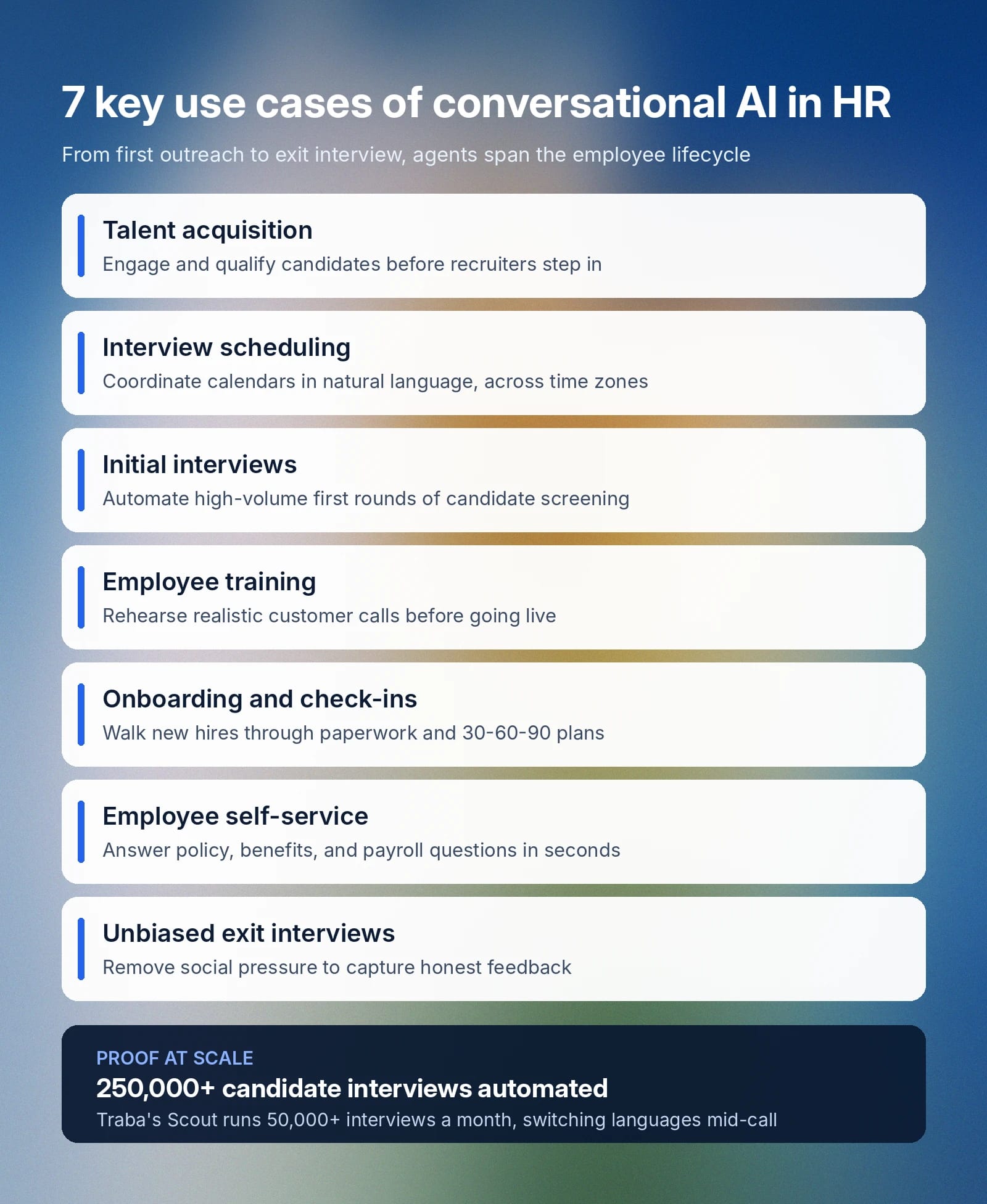
Poniżej znajdziesz główne zastosowania Conversational AI w HR.
Pozyskiwanie talentów
Wyszukiwanie nowych talentów do firmy to ważny element procesu HR. Gdy kandydaci zostaną znalezieni na LinkedInie lub portalach z ofertami pracy, agenci Conversational AI mogą sami nawiązać kontakt. Agent prowadzi naturalną rozmowę z kandydatami, odpowiada na pytania dotyczące stanowiska i kwalifikuje zainteresowanie, zanim przekaże obiecujące kontakty ludzkim rekruterom.
Pozyskiwanie kontaktów do nowych talentów z AI pomaga skalować rekrutację i zapewnia odpowiednią liczbę kandydatów na dane stanowisko.
Planowanie rozmów kwalifikacyjnych
Zamiast wysyłać statyczny link do rezerwacji, Conversational AI może rozmawiać z kandydatami i zespołami HR, koordynować kalendarze oraz automatycznie planować rozmowy. Narzędzia te działają w różnych strefach czasowych, rozumieją prośby typu „czy możemy przenieść to na czwartek?”, wysyłają przypomnienia i przekazują rekruterom potrzebne informacje przed każdą rozmową.
Integracja AI z procesem planowania rozmów skraca czas do rozmowy i zmniejsza obciążenie administracyjne zespołu ds. talentów.
Wstępne rozmowy kwalifikacyjne
Firmy mogą otrzymywać dziesiątki tysięcy CV w jednym kwartale. Nawet po ich przejrzeniu i wybraniu osób do rozmowy pierwszego etapu wciąż może zostać setki lub tysiące rozmów. Korzystanie z agenta AI do rekrutacji HR upraszcza ten proces: prowadzi wstępne rozmowy i automatyzuje pierwsze etapy.
Szkolenie pracowników
Szkolenie pracowników to jedno z najważniejszych zastosowań Conversational AI w HR.
Wiele stanowisk wymaga szerokiego szkolenia, zanim pracownicy będą gotowi kontaktować się z klientami. W obszarach takich jak obsługa klienta, gdzie codzienne rozmowy mieszczą się zwykle w przewidywalnym zakresie, firmy mogą używać AI, by przyspieszyć szkolenia.
Firmy mogą tworzyć agentów AI symulujących rozmowy z klientami, by szybciej przygotować nowe osoby do pracy bez ryzyka związanego z ćwiczeniem na prawdziwych połączeniach.
Dotyczy to szkoleń sprzedażowych AI, gdzie agenci odgrywają rolę potencjalnych klientów, aby przedstawiciele mogli ćwiczyć reagowanie na obiekcje z pomocą trenera sprzedaży AI; szkoleń dla contact center, gdzie uczestnicy ćwiczą wszystko — od rutynowych pytań po trudne skargi; oraz ogólnych szkoleń w miejscu pracy, od scenariuszy zgodności po trudne rozmowy.
Wsparcie i check-iny podczas onboardingu
Onboarding jest pracochłonny, ale często dobrze udokumentowany. Każda nowa osoba musi przejść spersonalizowany onboarding dopasowany do swojej roli, aby od razu dobrze zacząć pracę. Agenci Conversational AI mogą przeprowadzić nowe osoby przez formalności i wstępną konfigurację stanowiska.
Zespoły ds. talentów mogą skonfigurować onboarding w dowolnym stylu. Mogą na przykład zaprogramować chatbota HR, który przekazuje nowym pracownikom informacje o ich planach na pierwsze 30, 60 i 90 dni. Jeśli nowy pracownik ma pytanie, może zapytać asystenta HR AI, oszczędzając zespołowi ds. talentów wymianę wiadomości w rutynowych sprawach.
Samoobsługa pracowników
Od pytań o wewnętrzne zasady po wyjaśnienia dotyczące benefitów lub wynagrodzeń — zespoły HR są zasypywane prośbami o informacje. Zwykle odpowiedzi na te pytania są dobrze opisane w firmowej wiki. Nowi, ale też doświadczeni pracownicy mogą po prostu nie wiedzieć, gdzie szukać potrzebnych informacji, więc zamiast tego piszą do HR.
Tworząc agenta Conversational AI połączonego z wewnętrzną bazą wiedzy, możesz dostarczać pracownikom odpowiedzi w kilka sekund. Chatboty HR do samoobsługi znacznie zmniejszają liczbę zgłoszeń, które w przeciwnym razie trafiałyby do zespołów HR i people ops.
Bezstronne rozmowy końcowe
Rozmowy końcowe są ważnym etapem cyklu życia pracownika. Pomagają firmom lepiej zrozumieć, co mogą poprawić, aby przyszłym pracownikom pracowało się lepiej. Problem w tym, że taką rozmowę może prowadzić osoba znająca odchodzącego pracownika, co może prowadzić do konfliktów i stronniczości.
Użycie agenta Conversational AI do rozmów końcowych całkowicie usuwa presję społeczną, którą tworzy znajomy rozmówca. Może to pomóc zebrać bardziej szczere opinie od odchodzącego pracownika i dać firmie jaśniejszy obraz obszarów do poprawy.
Wsparcie globalnej, wielojęzycznej kadry
Kolejną ważną zaletą Conversational AI jest możliwość obsługi zadań HR w międzynarodowych zespołach. Globalne firmy potrzebują systemu, z którym pracownicy mogą kontaktować się nie tylko w jednym języku. Obsługa głosowa i wielojęzyczność pozwalają Conversational AI docierać do pracowników w preferowanym przez nich języku i formacie.
W ElevenLabs wpisaliśmy to w naszą kulturę — od pierwszego dnia pracy zdalnej jest fundamentem naszej firmy. Pracownicy mogą rozmawiać z naszymi wewnętrznymi agentami w wielu językach, co zapewnia im maksymalną wygodę. Wielojęzyczni agenci Conversational AI obsługują użytkowników sprawniej niż narzędzie ograniczone do jednego języka.
Bezpieczeństwo, prywatność i zgodność w Conversational AI dla HR
Dane HR zawierają wiele wrażliwych informacji — od danych osobowych pracowników i kandydatów po dane płacowe. Każde naruszenie może mieć poważne skutki prawne i finansowe oraz zaszkodzić reputacji firmy.
Ze względu na wrażliwość danych HR Conversational AI musi oferować szereg mechanizmów zapewniających zgodność z przepisami. Oto wybrane elementy bezpieczeństwa i prywatności, które powinny mieć chatboty HR:
- Certyfikacja SOC 2 Type II: Potwierdza, że platforma spełnia uznane standardy m.in. w zakresie bezpieczeństwa i poufności.
- Zgodność z RODO: Zapewnia zgodne z prawem przetwarzanie danych osobowych, szczególnie w organizacjach działających w UE lub zatrudniających w niej pracowników.
- Funkcje zgodności dla konkretnych branż: Wymogi takie jak HIPAA mają znaczenie, gdy dane HR podlegają również regulacjom specyficznym dla danego sektora.
- Tryb Zero Retention: Możliwość zapobiegania zapisywaniu danych z rozmów po ich przetworzeniu, aby ograniczyć ryzyko związane z wrażliwą komunikacją.
Przed wdrożeniem rozwiązania Conversational AI w zespołach HR sprawdź standardy bezpieczeństwa i zgodności oferowane przez narzędzie. Potrzebujesz jasnej informacji o tym, jakie dane są zbierane, gdzie są przechowywane, jak są przetwarzane, kto ma do nich dostęp i jak długo są przechowywane.
ElevenAgents spełnia wszystkie te wymagania i zapewnia zgodne z przepisami rozwiązanie do integracji z systemem HR.
Case studies: AI w HR w praktyce
Conversational AI naturalnie integruje się z szerokim zakresem zastosowań HR, pomagając zespołom usprawniać wewnętrzne procesy — od onboardingu po offboarding.
Poniższe case studies pokazują skuteczność Conversational AI dla HR w różnych zastosowaniach.
Traba automatyzuje ponad 250 000 rozmów dzięki agentom głosowym AI
Traba, platforma rekrutacyjna dla przemysłowego łańcucha dostaw, stworzyła Scout — prowadzącego rozmowy agenta AI na ElevenAgents, który telefonicznie weryfikuje kandydatów do pracy w magazynach i logistyce. Potrafi przełączać się między angielskim i hiszpańskim w trakcie rozmowy, zapewniając wielojęzyczne doświadczenie rekrutacyjne.
Scout prowadzi teraz ponad 50 000 rozmów miesięcznie, automatyzując 85% całej weryfikacji pracowników i oszczędzając ponad 4 000 godzin pracy operatorów miesięcznie. Pracownicy zakwalifikowani przez AI osiągają nawet o 15% wyższy wskaźnik ukończenia zmian niż osoby zakwalifikowane przez ludzi.
EXL przyspiesza szkolenie pracowników o 20% dzięki ElevenAgents
EXL stworzył Operations AI — platformę szkoleniową opartą na ElevenAgents, która oferuje wielojęzyczne, świadome emocji symulacje głosowe o niskich opóźnieniach i dokładnie odwzorowuje prawdziwe rozmowy z klientami.
Obsługa klienta — osoby szkolące się mogły korzystać z tego systemu, by zyskać pewność siebie przed pierwszą rozmową z prawdziwym klientem. Dzięki temu systemowi AI dla HR czas onboardingu spadł o 20%, a wyniki szkoleń poprawiły się o 30%.
Liczba błędów operacyjnych w pierwszym tygodniu również spadła o 60%, co pokazuje potencjał Conversational AI w szkoleniu pracowników.
Apna zapewnia 7,5 mln minut rozmów rekrutacyjnych AI z ElevenLabs
Apna, wiodąca indyjska platforma do szukania pracy i rozwoju kariery, chciała, by ćwiczenie rozmów próbnych przypominało prawdziwą rozmowę. Zastosowała ElevenAgents, aby zapewnić użytkownikom spersonalizowane doświadczenia rekrutacyjne, obsługując ponad 1,5 mln rozmów AI.
Dzięki ponad 7,5 mln minut rozmów głosowych kandydaci mogli ćwiczyć umiejętności w różnych językach, a całe doświadczenie było w pełni dopasowane do ich CV i docelowego stanowiska.
Ebury skaluje globalny coaching sprzedażowy dzięki dostępnej zawsze akademii AI
Globalny fintech Ebury działa w regionach różniących się językami i warunkami rynkowymi, gdzie tworzenie lokalnych zespołów szkoleniowych wszędzie nie jest możliwe do utrzymania. Jego AI Sales Academy pozwala przedstawicielom zalogować się, wybrać scenariusz i odegrać rozmowę na żywo z agentem AI, który naturalnie odpowiada w czasie rzeczywistym, a następnie ocenia ich wyniki i natychmiast przekazuje feedback.
Rezultatem jest ciągły program coachingowy, którym uczestnicy kierują samodzielnie i który jest dostępny przez całą dobę. Zaledwie sześć miesięcy po uruchomieniu Ebury wdrożyło ponad 600 globalnych użytkowników sprzedażowych do asystenta szkoleniowego 24/7.
Hunar.AI przyspiesza onboarding pracowników pierwszej linii o 90%
Hunar.AI tworzy agentów głosowych automatyzujących zatrudnianie, onboarding i retencję pracowników pierwszej linii w Indiach. Wybrała ElevenLabs ze względu na naturalnie brzmiące głosy o niskich opóźnieniach w językach hindi, tamilskim i angielskim.
Przy ponad 90 000 minut interakcji głosowych miesięcznie Hunar.AI przyspieszył cykle onboardingu o 90%, a jednocześnie zwiększył roczną retencję pracowników o 35%.
Na co zwrócić uwagę w Conversational AI dla HR
Zwłaszcza gdy firma dopiero zaczyna integrować systemy AI ze swoim stosem technologicznym, ustalenie, czego dokładnie szukać w narzędziach Conversational AI, może być trudne.
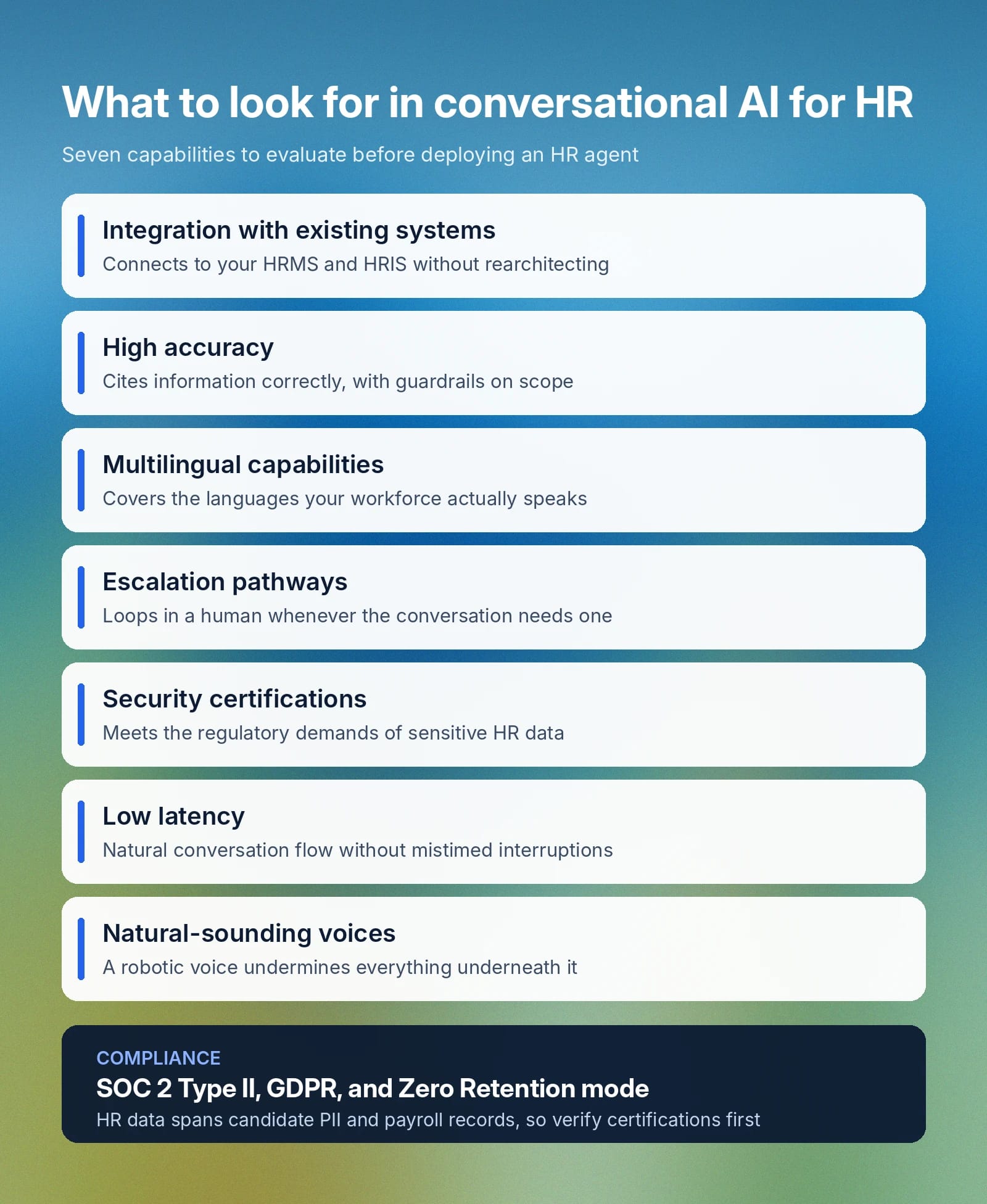
Oto główne funkcje, których warto szukać w najlepszym chatbocie HR:
- Integracja z obecnymi systemami: Agent musi łączyć się z istniejącymi systemami HR, bez potrzeby kosztownej przebudowy architektury czy dużych zmian.
- Wysoka dokładność: Systemy Conversational AI powinny precyzyjnie przytaczać informacje i mieć zabezpieczenia, które nie pozwolą im wyjść poza zatwierdzone obszary rozmowy. Jest to szczególnie ważne przy wrażliwych tematach, ponieważ ograniczenie błędnych odpowiedzi pomaga uniknąć problemów ze zgodnością.
- Możliwości wielojęzyczne: Dopasuj możliwości językowe systemu AI dla HR do potrzeb swojej kadry. Upewnij się, że obsługuje języki, którymi na co dzień mówią pracownicy.
- Możliwość przekazania sprawy pracownikowi: Upewnij się, że konwersacyjny agent AI ma systemy eskalacji, które w razie potrzeby mogą zaangażować pracownika.
- Certyfikaty bezpieczeństwa: Każdy agent przetwarzający wrażliwe dane musi mieć wymagane certyfikaty zgodności, aby spełniać wymogi prawne i chronić dane firmy oraz klientów.
- Niskie opóźnienia: Agenci o niskich opóźnieniach pomagają zapewnić naturalny przebieg rozmowy z pracownikami i kandydatami, bez niezręcznych pauz czy przerwań w złym momencie. W przypadku agentów HR działających na czacie niskie opóźnienia oznaczają też szybsze odpowiedzi na pytania, a tym samym większe zadowolenie z usługi.
- Naturalnie brzmiące głosy: Niezależnie od możliwości agenta Conversational AI, jeśli brzmi robotycznie lub monotonnie, doświadczenie użytkownika będzie znacznie gorsze. Wszędzie, gdzie agent korzysta z głosu, powinien mieć naturalnie brzmiące głosy, aby rozmowa była jak najprzyjemniejsza.
Niezależnie od tego, czy korzystasz z agentów czatowych, głosowych czy obu typów, oto możliwości, na które warto zwrócić uwagę.
Zacznij korzystać z ElevenAgents do automatyzacji HR
Dzięki szerokiemu zakresowi zastosowań, licznym korzyściom i praktycznym rozwiązaniom Conversational AI dla HR jest wartościową inwestycją. Niezależnie od tego, czy masz już konkretny pomysł, czy po prostu chcesz wypróbować chatbota HR w wewnętrznych procesach, ElevenLabs może pomóc.
Więcej informacji znajdziesz na platformie ElevenAgents lub skontaktuj się z działem sprzedaży, aby zobaczyć, jak Agents mogą zintegrować się z obecnym stosem technologicznym HR.
FAQ: Conversational AI dla HR

Jack Limebear jest w zespole Growth, gdzie pisze teksty i tworzy strategie na bloga i stronę z insightami. Zanim dołączył do ElevenLabs, przez ponad dekadę prowadził strategie contentowe dla firm – od szybko rosnących startupów SaaS po spółki z listy Fortune 500. Ma tytuł magistra literatury angielskiej z Uniwersytetu Cambridge.