How hackathon teams are using ElevenLabs to make care more accessible
- Written by
- Nithin Kumar
- Published
- Last updated
ListenListen to this article
This spring, we supported three hackathons where students and clinicians had just hours to turn an idea into a working prototype. Across Philadelphia, London, and Boston, the same pattern showed up: teams reached for voice to make clinical care easier to access and understand. The most outstanding projects point to where voice AI is most useful - removing the barriers of language, time, and technical skill that keep people from getting help.
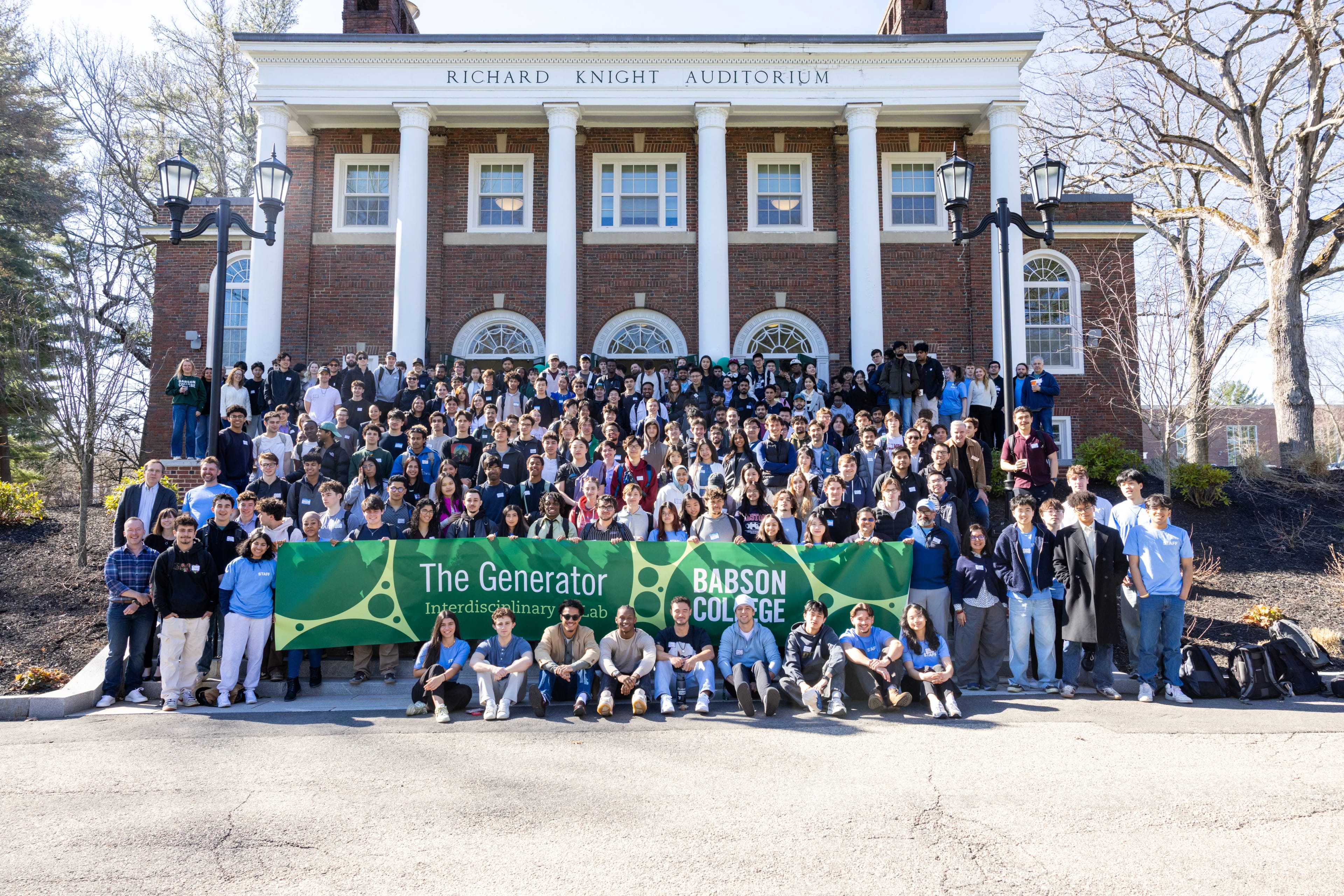
The Generator Build-a-thon drew more than 450 students from over 30 schools - the lab's largest event yet.
Babson's Generator Build-a-thon
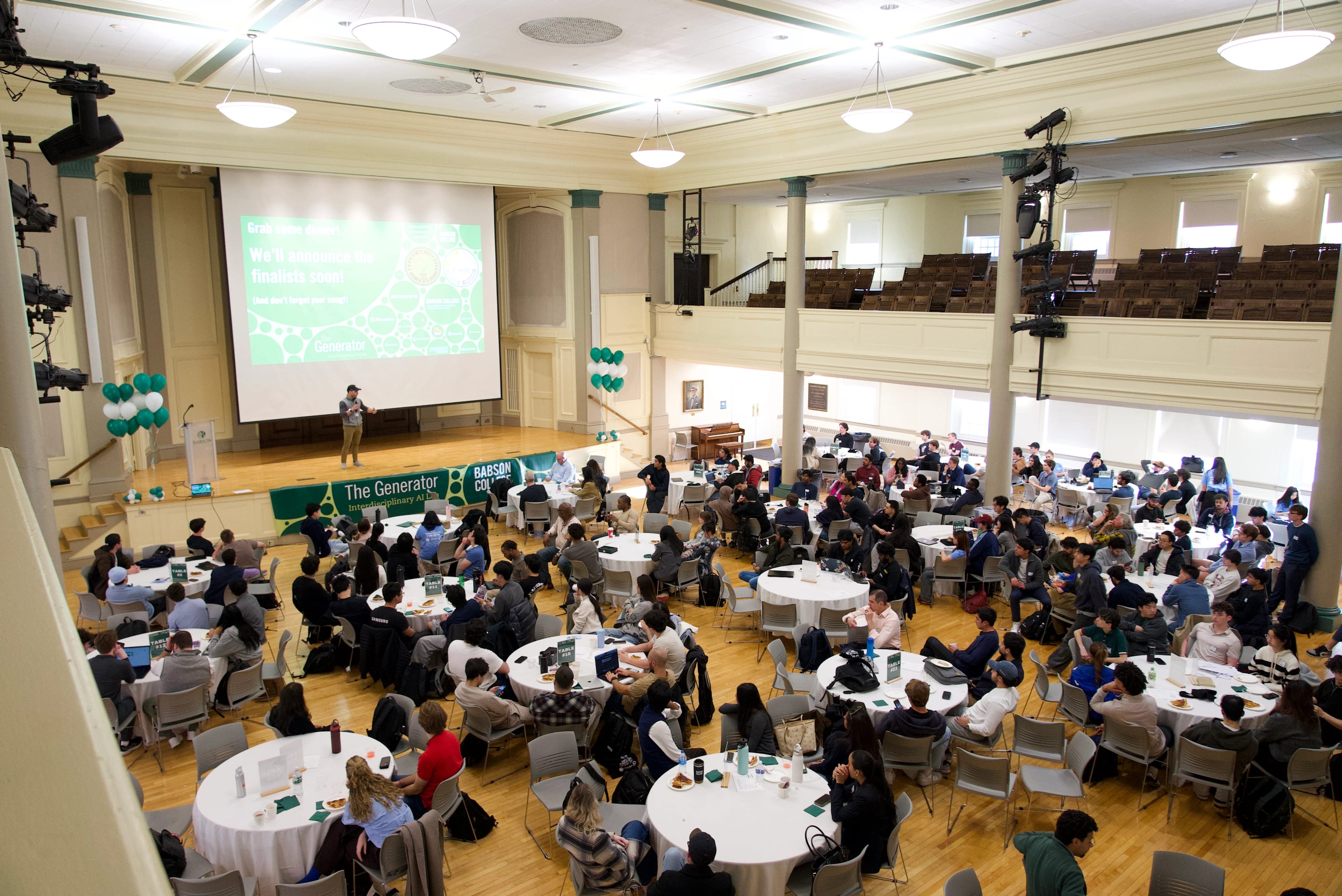
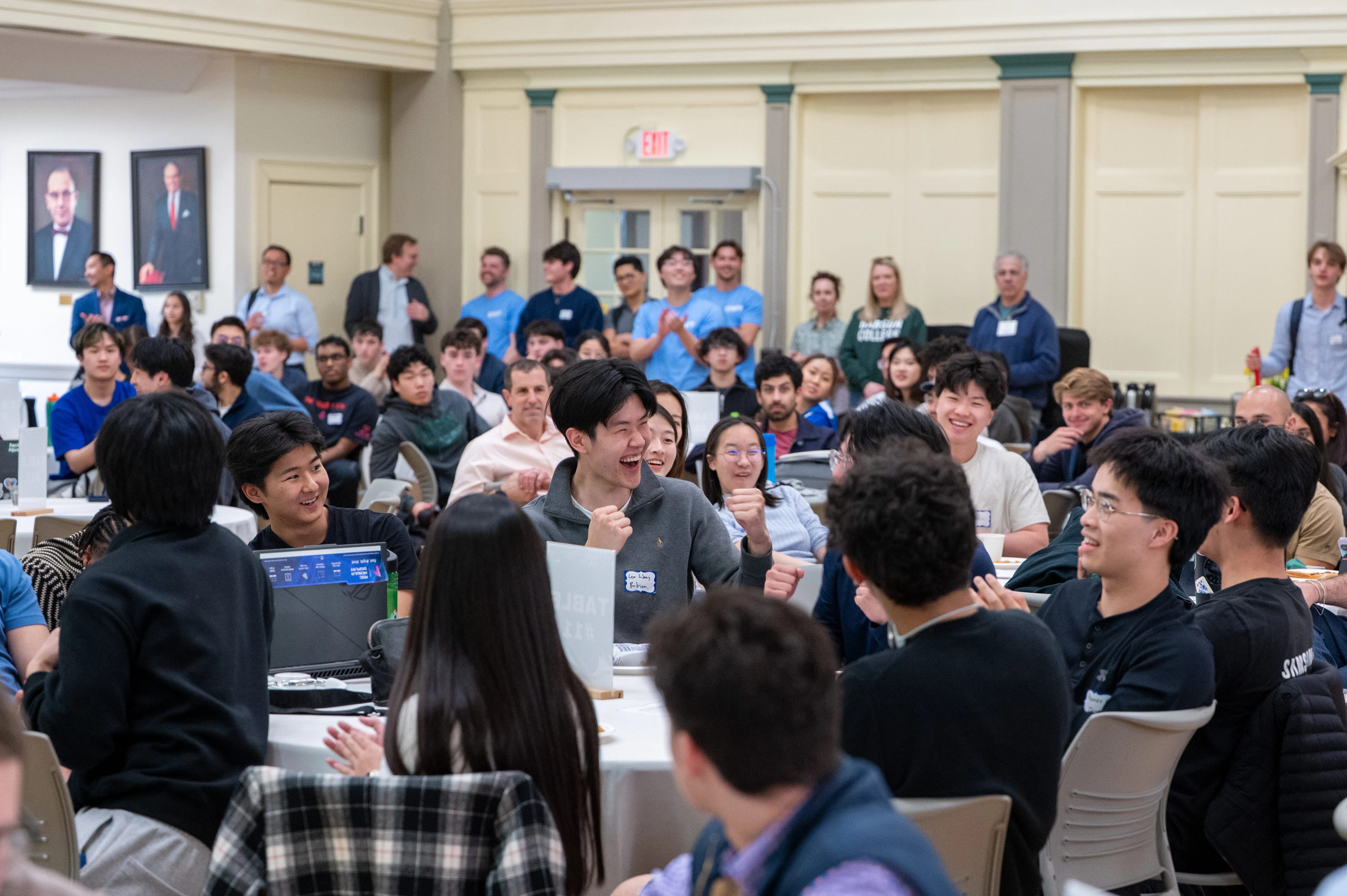
We sponsored the Generator Build-a-thon at Babson College on April 11, run by The Generator, Babson's interdisciplinary AI lab. It was the lab's largest event yet, with more than 450 students registered and over 30 schools represented. The theme was "AI x Body & Mind" - enhancing athletic performance, improving accessibility, and addressing underserved markets and communities. Teams had 12 hours to ship a prototype, competing across three tracks for a share of $8,000 in prizes.
One finalist team, VOCA, built on ElevenLabs. VOCA is a communication tool for people who are nonverbal or minimally verbal, a group that includes an estimated 25% to 30% of individuals with autism, along with many people living with ALS, stroke, severe aphasia, or a traumatic brain injury.
VOCA aims to flip the usual model. Instead of replacing how a person communicates, it preserves their existing language and bridges the gap on the listener's side. The team built a living profile of how an individual actually communicates, so a caregiver can look up an unfamiliar phrase, get its likely meaning and a suggested response, and understand the person from their first shift. ElevenLabs powers the spoken layer that makes that exchange immediate. As the team put it: "The people who understand them most shouldn't be the only ones who can."
Voice diagnosis and patient referral at the Penn AI Hackathon
We also sponsored the Penn AI Hackathon on Apr 12, 2026 with 300+ participants.
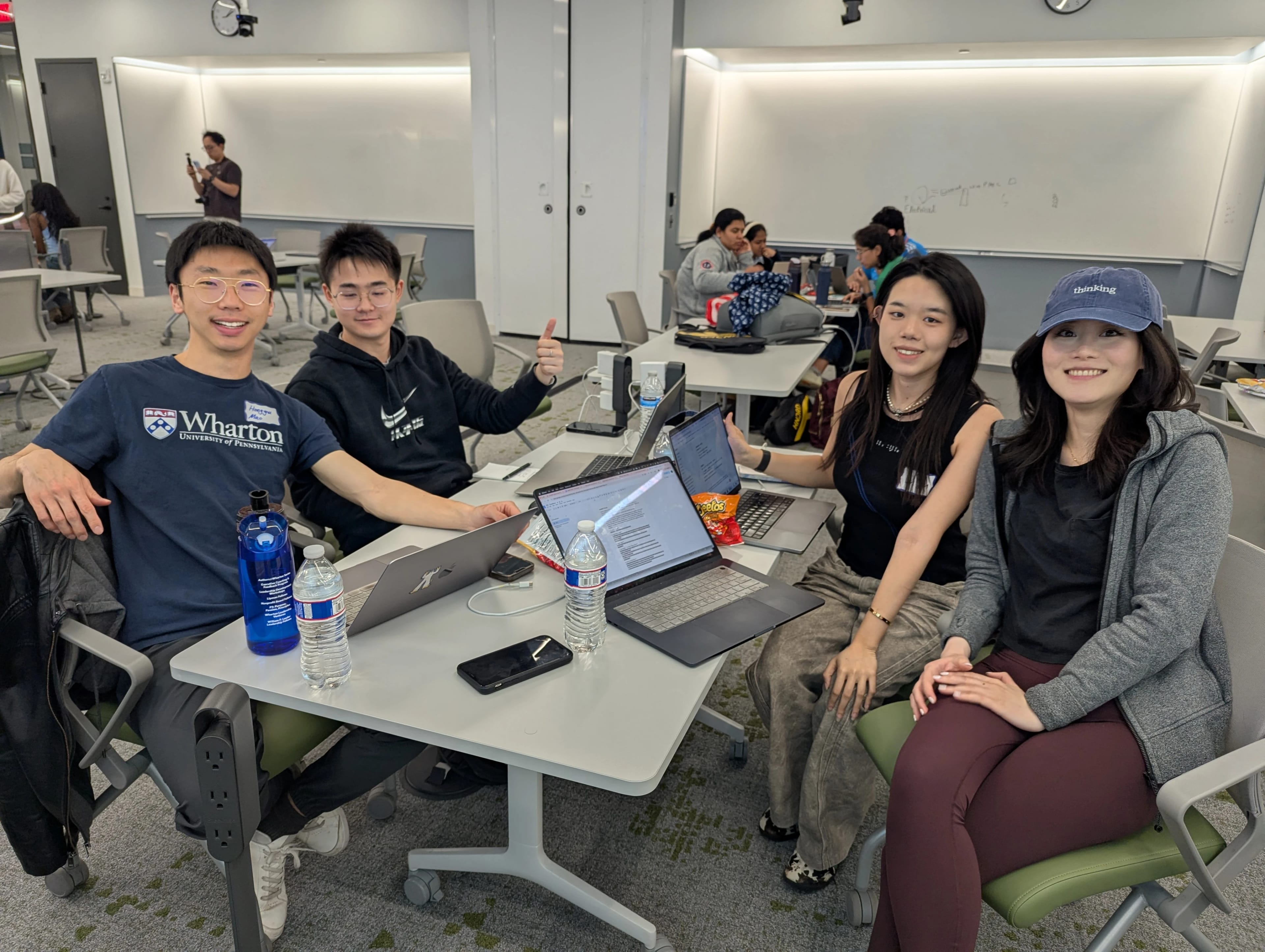
34 of the 41 teams at the Penn AI Hackathon built with ElevenLabs.
The overall winner, Timbre, used voice as a diagnostic signal. The team built a 60-second voice screening and rehabilitation tool for Parkinson's disease, using how a person speaks to surface a condition that is often caught late. It is a good example of voice as an input, not just an output - the microphone becomes a low-cost, at-home screening device.
The "Best use of ElevenLabs" award went to Junction, which tackles a gap most AI health tools ignore: what happens after the chatbot. When an AI front door determines a patient needs a real clinician, Junction manages that handoff by using ElevenLabs powered voice to route the patient to the right human provider and pass along their context. This leads to a booked appointment instead of a dead end.
Breaking language barriers in NHS primary care
At the Clinical OpenClaw Hackathon, run by the Inalyn CIC, the standout project tackled a problem that primary care teams face every day: language.
The winning project, Health Butler, used ElevenLabs to speak to patients in their own language, aimed directly at the health inequalities that come from language barriers. When a patient and a clinician do not share a language, everything gets harder — describing symptoms, explaining a diagnosis, following a treatment plan. ElevenLabs provided the localized voice layer: responses delivered in the patient's native language, in a voice that sounds natural to them, so a patient can understand what's wrong and what comes next without the conversation feeling foreign. The team showcased that potential at the hackathon.
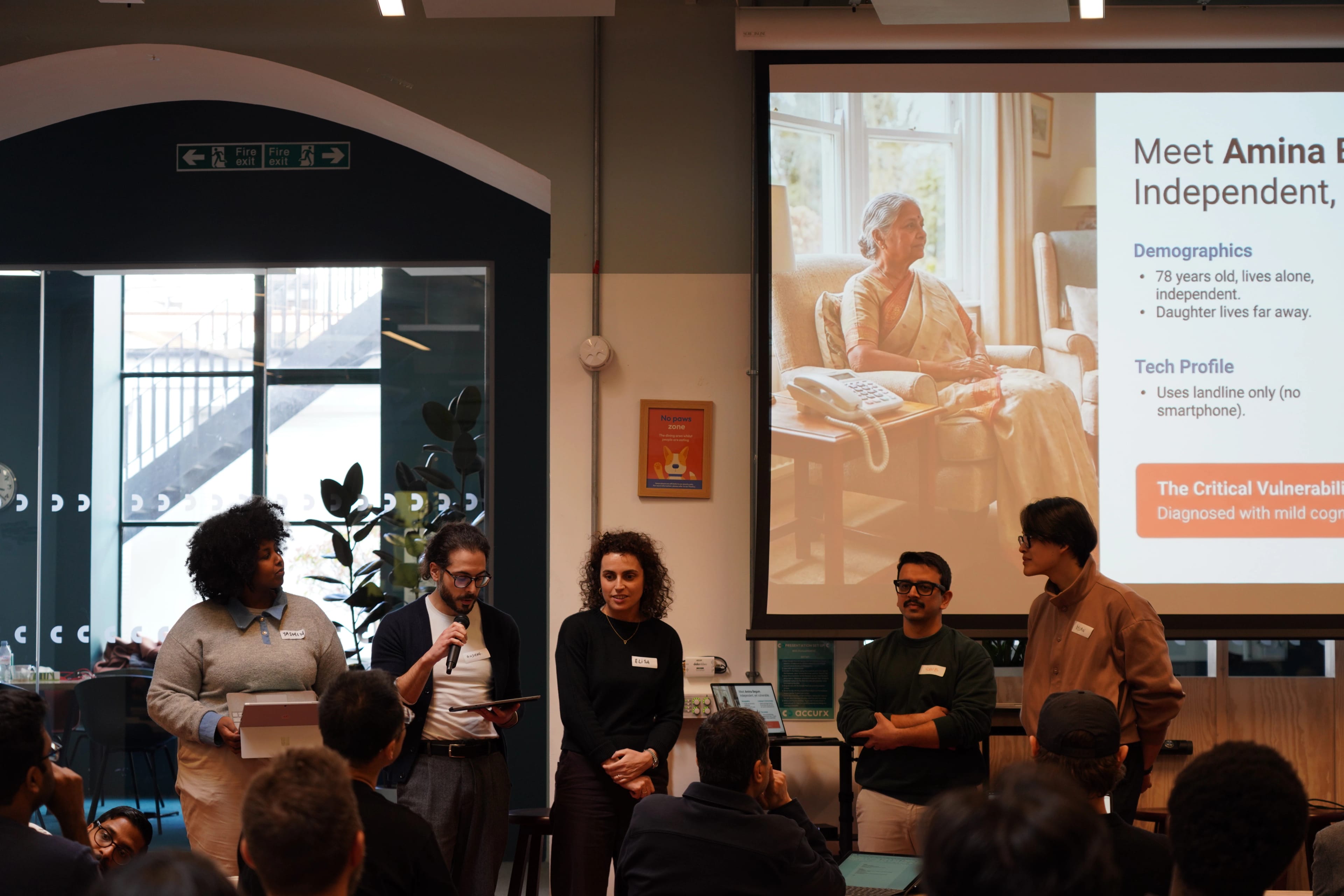
The winning project used ElevenLabs to accelerate care using native-language voice (Image credits: https://koovi.media/)
Why we support hackathons
Hackathons are where we see our tools used in innovative and impactful ways. Every month, we support over 40 of these events, helping builders turn limited time into limitless potential. A team with one weekend and a real problem will find the shortest path to something that works, and that path tells us what voice is genuinely good for. This spring it pointed in a consistent direction: voice as an accessible interface and translation as a bridge across languages.
To make that possible, we give every participant free access to the ElevenLabs Creator tier for the event, so cost is never the reason a team cannot try an idea. As part of our commitment to supporting builders, we provide winning participants with promotional codes for three to six months of access to our Pro or Scale tiers.
Part of the ElevenLabs Impact Program
This work sits inside the ElevenLabs Impact Program, our effort to put voice AI in the hands of the people who can use it to remove barriers - in healthcare, education, and culture. The Impact Program focuses on hackathons hosted by universities and nonprofit organizations, where access to voice AI can remove a real barrier for students and communities. ElevenLabs supports many other hackathons too, through our broader developer and growth programs.
Beyond hackathons, our Impact Program x Professors initiative gives university educators free access to ElevenLabs Pro and lets them extend time-bound access to students for specific courses and projects, so a weekend prototype doesn't have to stop when the hackathon ends. With access that extends into the classroom and research lab — and professors to mentor the work — these projects can keep developing toward something real: a product that eventually reaches patients, not just a demo.
The throughline is the same one we saw across all three events, and it is the Impact Program's stated goal: helping one million people communicate, learn, and create without barriers.
If you're a university or nonprofit running a hackathon, an educator teaching a course, or a builder working on something that fits this mission, we'd like to hear about it.
Learn more at elevenlabs.io/impact-program and https://elevenlabs.io/hackathon, and explore what you can build at elevenlabs.io.

Nithin works on the Impact Program at ElevenLabs, helping bring free and discounted access to ElevenLabs' voice AI technology to nonprofits, educators, and organizations creating social impact across education, healthcare and culture. He is currently pursuing his MBA from Columbia University and is an IIT Bombay alumnus.