Sonic branding: Building your brand identity through sound
- Written by
- Jack Limebear
- Published
- Last updated
ListenListen to this article
When you think of brand recognition, your mind typically goes to sight. Logos. Colors. Even typography. All of these create a visual impression that can come to represent your brand within milliseconds of seeing them.
Sound, although able to get through to a customer even when they’re not looking, doesn’t receive the same attention. That’s especially surprising when so many users now spend their days listening rather than watching. From the increase in podcasts to the large parts of a day spent commuting, cooking, or just half-watching a screen, there’s more opportunity than ever before for sound.
Sonic branding operates in this aural space, allowing brands that take advantage of it to make their mark and connect with an audience through sound. In this article, we’ll define sonic branding, offer examples of companies who have used it successfully, and demonstrate why voice is one of the most important aspects of comprehensive modern branding.
Summary
- Sonic branding is the deliberate use of sound to make a logo or wider brand recognizable to an audience.
- Brands like Netflix, Apple, and Intel have extensive sonic branding, allowing audiences to recognize their company without even seeing the logo.
- Veritonic and Audacy found that sonic identity lifts ad recall, improves brand recognition, and enhances customer trust in a company.
- Voice is a major part of a brand’s sonic identity. Apple’s Siri demonstrates how a company’s voice can represent the wider brand in customer minds.
- ElevenLabs offers teams the ability to choose a voice and deploy it consistently across customer-facing channels.
What is sonic branding?
Sonic branding is the use of sound, often in the form of a short audio cue, to make a brand instantly recognizable. Even without seeing the brand’s logo or marketing materials, sonic branding allows you to hear a noise and associate it with a specific company.
The best way to describe sonic branding might be to show you. Close your eyes and play the following clip:

There’s a high chance that you’ve heard that small sound before, as it’s the signature noise that plays when opening Netflix, the $340 billion entertainment titan.
Yet, despite being able to reach customers even when they’re not looking, sonic branding is often treated as a lower priority than visual identity. For many companies, that means there’s a valuable opportunity to push further into sonic branding and establish your brand in the aural space.
What does sonic branding sound like?
Sonic branding is extremely effective, as it’s truly unavoidable. If the sound is playing anywhere in a room, then you’re going to hear it (and potentially even subconsciously think of the company you associate it with).
Here are some examples of sonic branding in action.
Apple
Jim Reekes designed the Mac startup chime for Apple back in 1991. Every Mac that started up from that date until 2016 began with the same sound, the short C major chord quickly becoming synonymous with the brand.
Intel
Intel’s five-note sonic imprint is instantly recognizable, forming part of television ads for the company since composer Walter Werzowa created it in 1994. The five notes aim to mirror the phrase ‘Intel Inside’ sonically.
Law & Order
While not a typical brand, the Law & Order scene-change sound has become synonymous with the show. The New York Times even named it the most successful sound in television history back in 2017. The sound was created by Mike Post out of dozens of layered audio clips, including jail cell doors slamming and a crowd of people stamping on the floor. These two notes have become iconic to the series and establish a consistent aural tone across scenes and even different versions of the show.

All of these examples demonstrate how a short sound clip can transcend its own composition and come to represent something much larger.
Sonic branding vs. audio branding
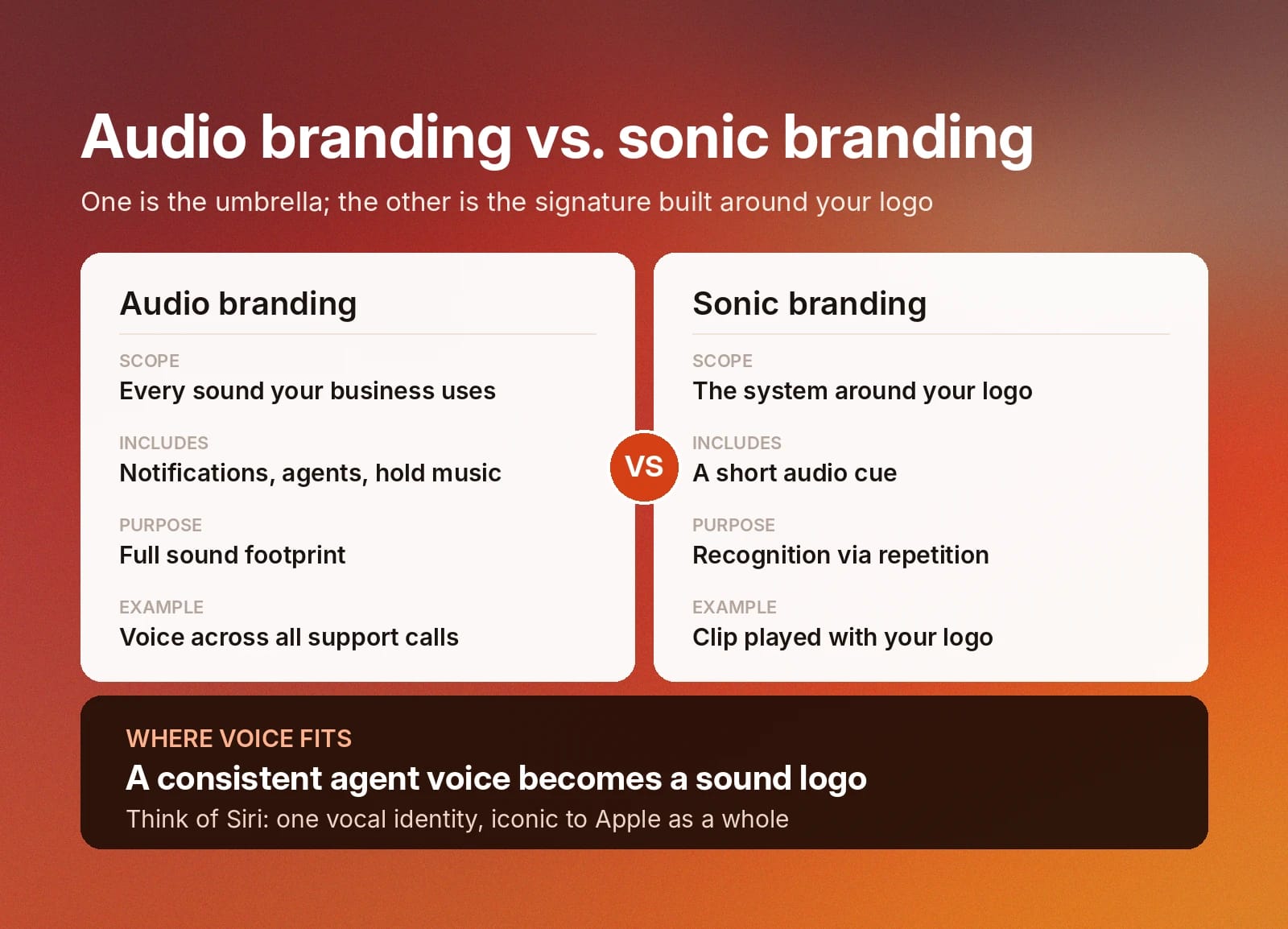
Sonic branding and audio branding overlap but don’t describe the same thing. Audio branding is an umbrella term that encompasses every single decision a company makes related to audio. That could mean in-app notification sounds or even the voice you use on AI customer service calls.
Sonic branding is more specific, typically only extending to the strategic choice of sounds built around a core logo. Many of the most famous examples are short and wordless, allowing them to be played in conjunction whenever brands show their logo.
Audio branding
Sonic branding
Scope
All of the sounds your business uses to create its customer-facing experiences
The sound system you build around your core logo
Includes
Notification sounds, voice agents, ambient in-store audio, sonic logo, hold music, and more
A short audio cue
Purpose
Full sound footprint of a brand
To create brand recognition with a repeatable audio signature
Example
The voice and tone you use across every customer service interaction
A short clip you play when displaying your logo in an ad
Why sonic identity matters for brand recognition
Sound reaches a user even when they’re not actively looking at the screen where the sound is coming from. Especially as individuals continue to engage more frequently with audio content, having a clear sonic identity helps set your brand apart from others.
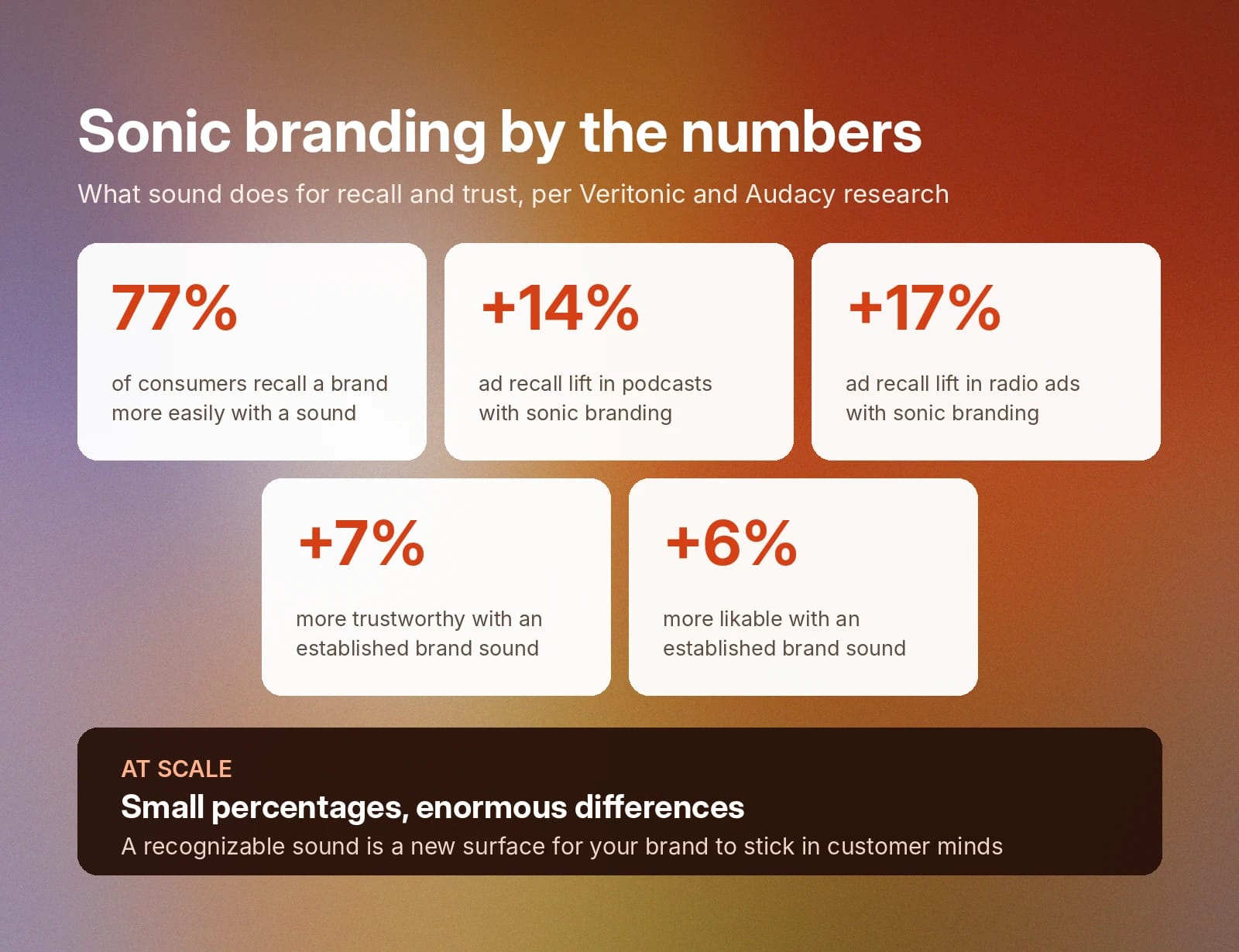
Veritonic published research that suggests 77% of consumers can recall a brand more easily when they associate it with a certain sound. Similar studies conducted by Audacy revealed that sonic branding increased ad recall in podcasts by 14% and in radio ads by 17%.
Clear sonic branding is also a trust signal. Brands that have an established sound are 7% more trustworthy and 6% more likable, according to Audacy.
At scale, these percentages can make an enormous difference in how the world perceives your brand. And, if you’re able to create a sound that becomes recognizable, it can push your global branding even further, creating a new surface for your brand to interact with customers and stick in their minds.
How voice becomes a part of your sonic identity with ElevenCreative
While short sonic branding clips are what built this genre of aural identity, one area that’s quickly emerging as an important choice companies need to make is the voices they select for their customer support agents. As more companies turn to AI agents that run large portions of their customer support and success lines, defining what voice you’ll choose and understanding how it represents your brand is an important choice.
An inconsistent voice across demos, call centers, and ads will undermine your company’s recognition. A consistent voice, on the other hand, becomes identifiable as a sound logo. Think of Susan Bennett, the voice of Siri, and how iconic that vocal identity has become to Apple as a whole.
ElevenLabs offers over 16,500 voices in our Voice Library, allowing you to sample thousands of potential fits for your AI agents. We combine best-in-class voice models with a wide range of video and image models, all cleared for commercial use (with a paid plan). Your brand can choose a voice and deploy it consistently across all of your marketing channels.
Learn more about building your sonic identity with ElevenCreative or sign up today to get started.
Frequently asked questions

Jack Limebear is on the Growth team, acting as a content writer and strategist across the blog and insights pages. Before ElevenLabs, he spent over a decade leading content strategy for organizations ranging from fast-growing SaaS startups to Fortune 500 companies. He holds a Master's degree in English Literature from the University of Cambridge.
.jpg&w=3840&q=80)