
Reaching Learners Everywhere: How TAP uses ElevenLabs to Scale Educational Content Across India
- Written by
- Nithin Kumar
- Published
- Last updated
ListenListen to this article
AI-powered voice, translation, image, video, music, and sound generation tools are helping TAP’s educators and creators build learning experiences faster and in more languages.
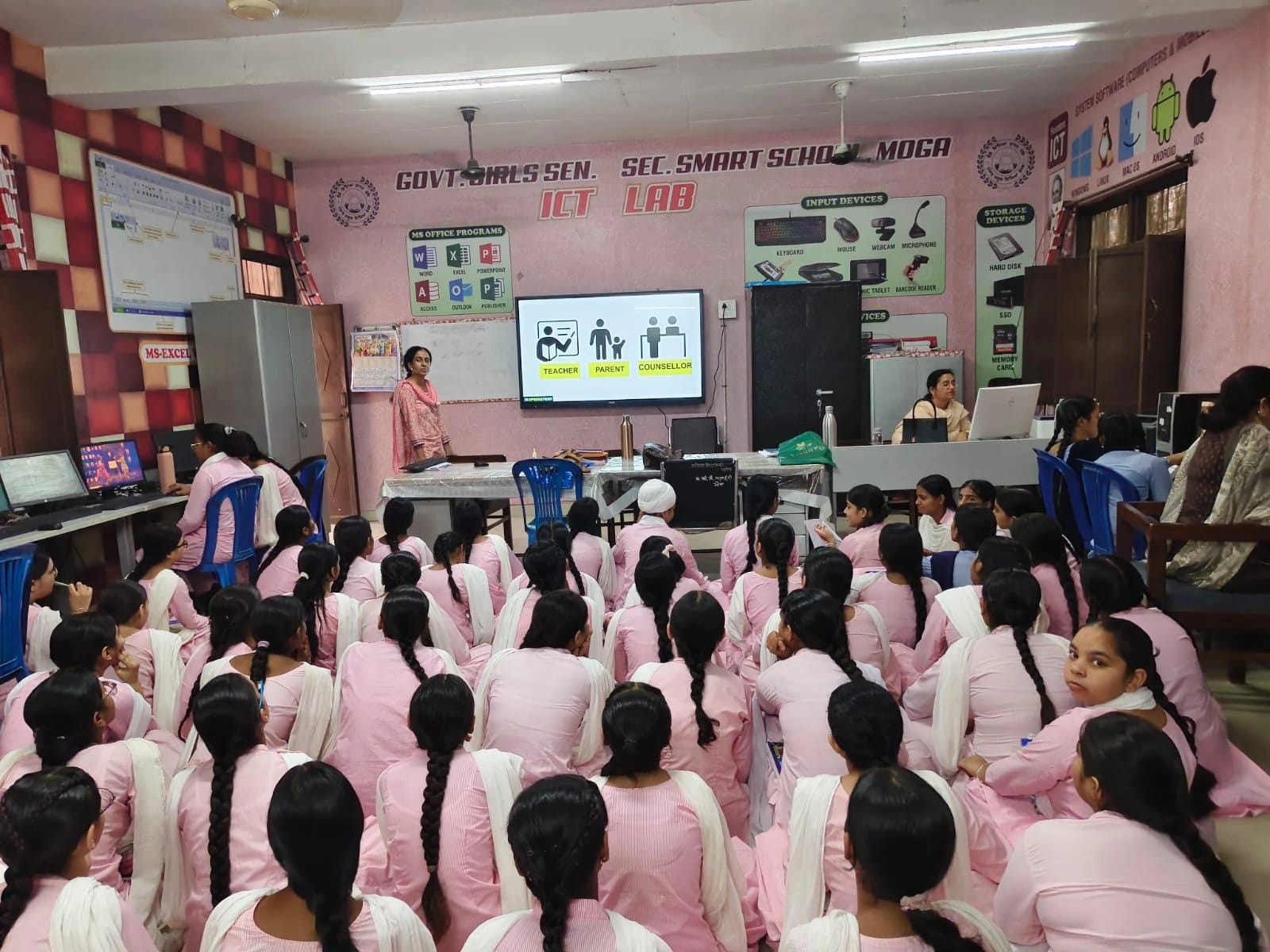
The Apprentice Project (TAP) builds 21st-century skills for students from under-served communities across India. By TAP's count, more than 60 million low-income middle and high school children in the country lack access to quality programs for building those skills: the creativity, confidence, communication, and problem-solving that the most in-demand careers require. TAP, a Harvard President's Innovation Challenge grand-prize winner, has been closing that gap since 2016. Today it works with more than 5,000 teachers in 3,000+ schools, supporting the learning of over 100,000 students across 34 districts.
India is home to incredible linguistic diversity, which makes multilingual educational content both essential and difficult to produce at scale. Through our Impact Program, we support the educators and creators who produce TAP's learning content.
Content for classrooms in four languages
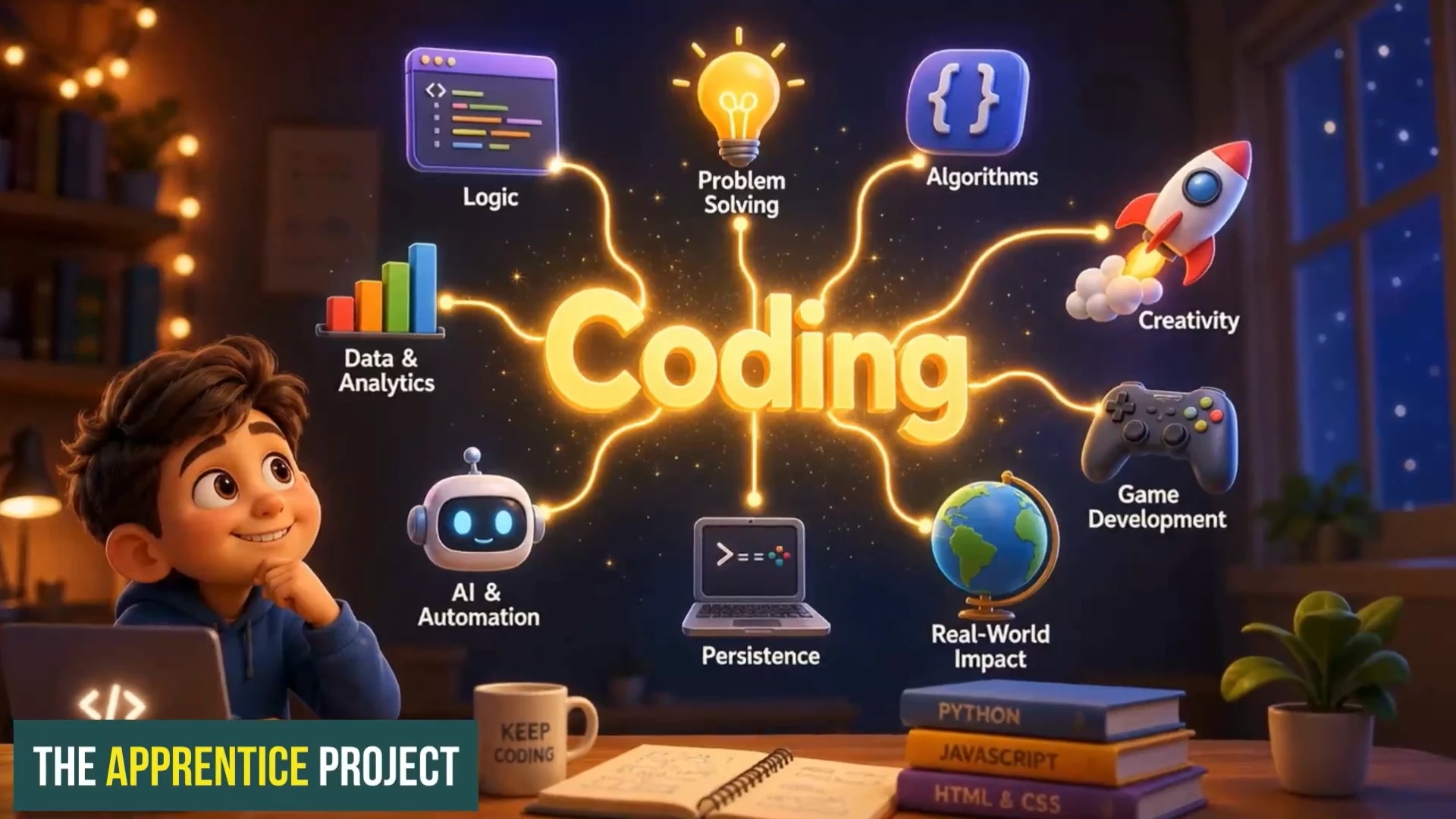
TAP's curriculum runs on video: project-based electives in coding, science, visual arts, and financial literacy, aligned with UNICEF's Comprehensive Life Skills Framework and India's National Education Policy 2020. TAP's impact data shows that students who engage 120 to 150 minutes a week for six months or more outperform their peers on creativity, complex problem solving, and managing emotions and personal goals.
Sustaining that means producing 70 to 80 educational videos every month, each with a script, voiceover, visuals, background music, and quality review, then versions in Marathi, Punjabi, Hindi, and Kannada so the same lesson works in classrooms across different states.
How they use ElevenLabs
TAP's educators and creators use our voice, translation, image, video, music, and sound generation tools to produce lessons from a single workflow. Producing a video now takes the team roughly half the time it used to, and a translation takes about a third less manual work, with human review still governing educational and linguistic accuracy. TAP's engineering team has also built two internal tools on our APIs:
AI video generation tool: The first tool turns a simple prompt into a complete educational video of two to three minutes, generating narration, images, video assets, background music, and sound effects automatically.
AI translation pipeline: The second translates finished educational videos into multiple regional languages using ElevenLabs' voice and translation capabilities. The workflow is largely automated, with final human review for linguistic and educational accuracy, which lets the team scale multilingual production consistently.
The hours that production used to consume now go to instructional design, visual storytelling, and the quality of what reaches the classroom.
The Impact So Far
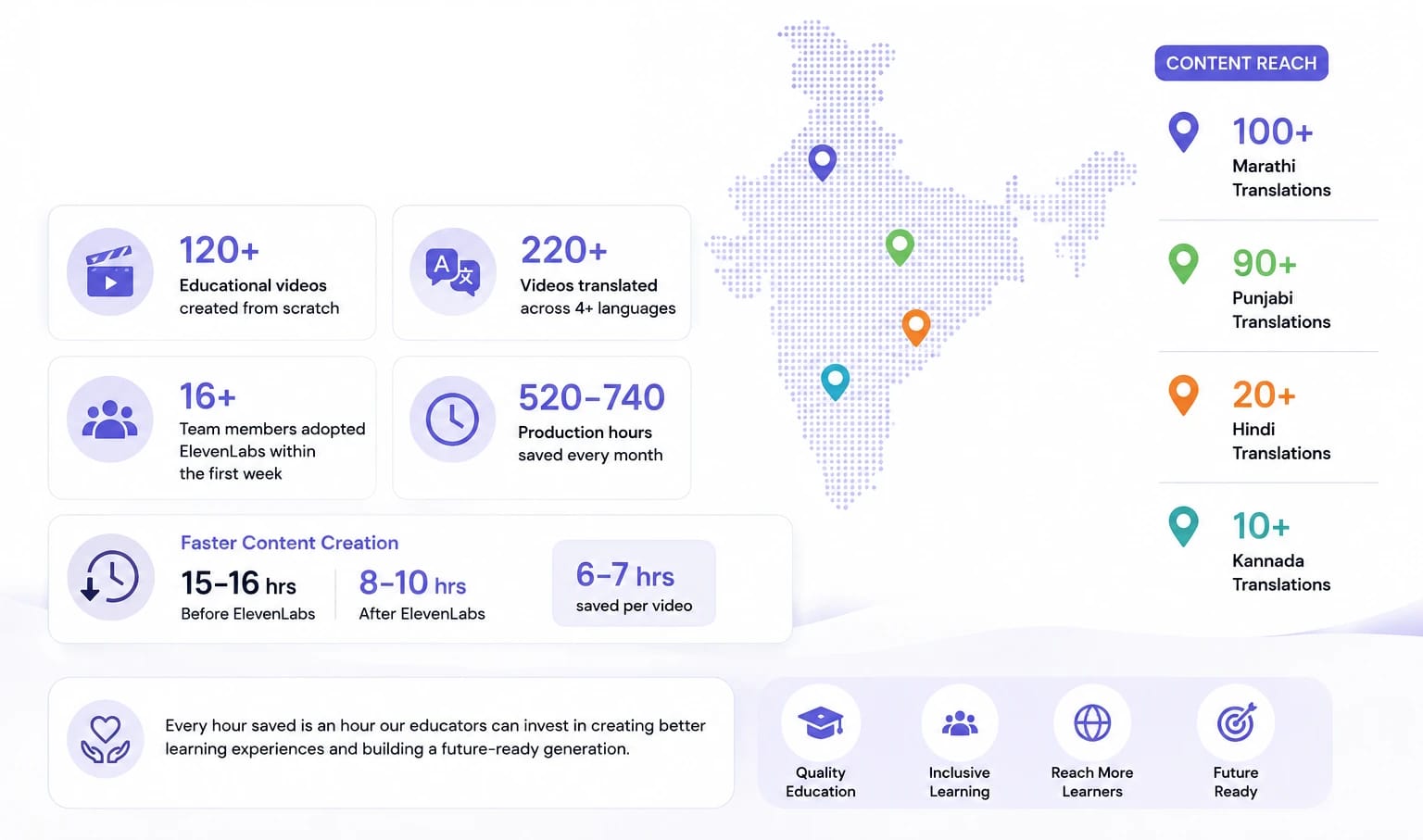
In three months, ElevenLabs has become a core part of TAP's content production pipeline. So far the team has created 120+ educational videos from scratch using ElevenLabs. They have translated 200+ videos into Marathi, Punjabi, Hindi and Kannada.
Beyond the numbers, TAP is now planning educational content in additional regional languages, moving closer to its vision of making quality education accessible across India.
What's Next?
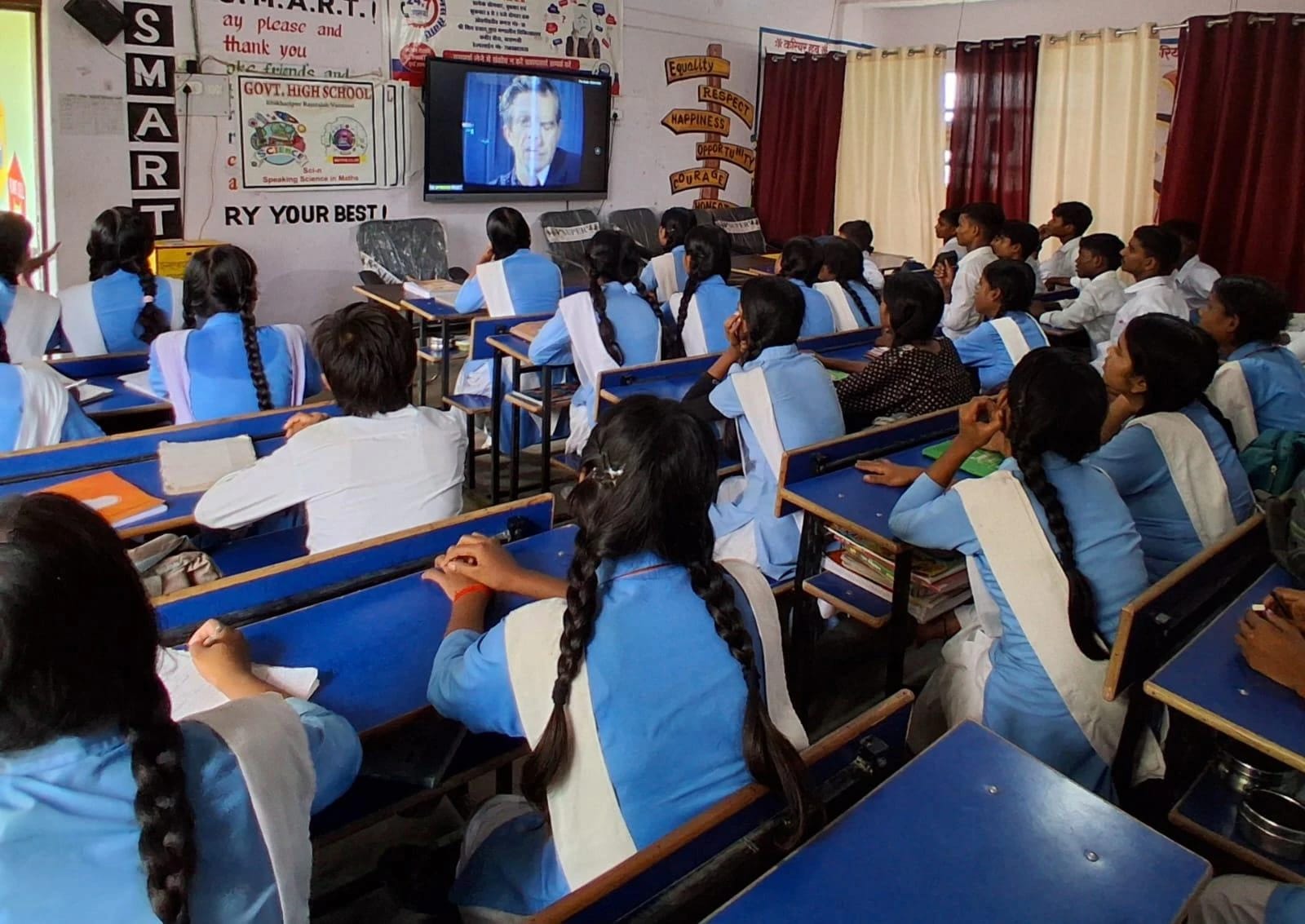
TAP is planning to expand its curriculum, visual content, and regional language offerings so that they can cater to learners across India. As TAP continues to scale, we will continue supporting the team in scaling high-quality, accessible education.
Apply to the ElevenLabs Impact Program
Through the ElevenLabs Impact Program, we help nonprofits reach more people with AI audio as part of our goal to help one million people communicate, learn, and create without barriers. If your organization works in education, accessibility, or culture, we encourage you to apply.
You can explore more of The Apprentice Project's work on its website.

Nithin works on the Impact Program at ElevenLabs, helping bring free and discounted access to ElevenLabs' voice AI technology to nonprofits, educators, and organizations creating social impact across education, healthcare and culture. He is currently pursuing his MBA from Columbia University and is an IIT Bombay alumnus.